
Show summary Hide summary
Imagine opening Steam on March 5 and seeing a familiar tower, now twisting in unexpected directions, inviting you back with new rules. That is the promise of Slay the Spire 2 entering Early Access: the comfort of a known masterpiece fused with risky experiments that only a live community can shape in real time.
Slay the Spire 2 Early Access launch: what March 5 really means
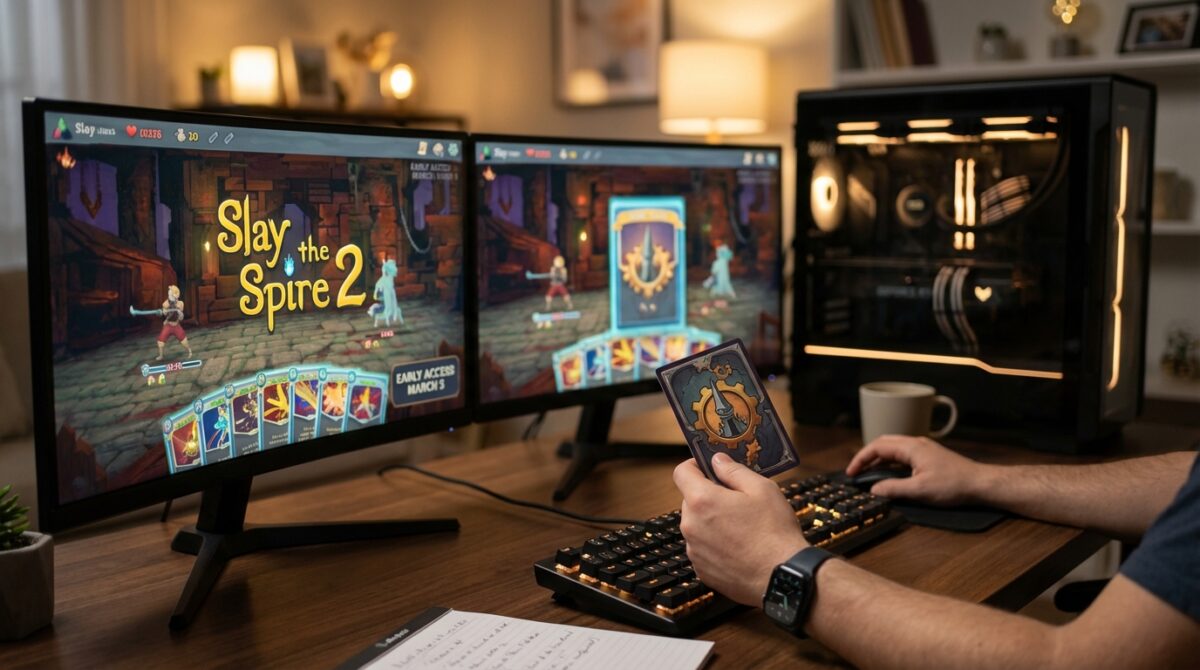
The date March 5 is more than a release window; it is the start of a long negotiation between Mega Crit and its players. Slay the Spire 2 arrives in Early Access on Steam as a work in progress, not a simple content update to the original deck-building Roguelike. You are being invited into a moving lab where every run generates feedback for the next patch.
According to details shared alongside the new animated trailer on sources like Mega Crit’s announcement and reports such as Gematsu’s coverage, the studio expects this phase to last one to two years. The team refuses to commit to a fixed end date, stating it will continue until “the game feels great” rather than just “done.” That philosophy mirrors how the first Slay the Spire gradually transformed from a niche indie game into a reference title for modern strategy design.
I Developed an App Integrating 3 Top Chatbots — And Found That the Key to Success Is a Well-Crafted Prompt
Top Apple HomeKit and Siri Gadgets to Enhance Your Smart Home in 2026
Why Mega Crit leans on Early Access for balance and innovation
Slay the Spire became famous because tiny balance tweaks could transform weak cards into centerpieces of entire archetypes. Mega Crit has explained that Slay the Spire 2 needs even more player feedback to reach that same level of finesse. Early Access gives designers thousands of test cases they could never reproduce internally, from obscure combos to odd hardware interactions that only surface in the wild.
The studio plans to use this period to test experimental mechanics that might initially feel uncomfortable. Some ideas will probably disappear after a few patches if data suggests they are harming long-term Gameplay. Others will be refined into signature systems that define the sequel. For players, that means your comments, runs, and even rage quits translate directly into design decisions, turning balance discussions on forums and Discord into part of the development toolkit.
Four-player co-op and how it reshapes deck-building strategy
The headline feature drawing attention is the new co-op mode, supporting up to four players in a shared climb. This is not a simple “everyone plays alone but together” variant. Mega Crit is introducing cards designed exclusively for multiplayer, along with team-wide synergies that reward communication and timing. A support-oriented deck that looked weak solo may become powerful once another player can exploit its setup turns.
Consider a group where one player specializes in defense, another in scaling damage, a third in debuffs, and a fourth in resource manipulation. In that scenario, sequencing matters more than ever: who plays which card first, when buffs are applied, and how resources get shared. The result turns Slay the Spire 2 into a tactical conversation rather than a solitary puzzle. For many fans, that is the biggest shift from the original, and it explains why outlets like IGN’s coverage of the four-player mode has gained so much traction.
Returning heroes, new faces, and evolving Roguelike runs
Veteran players will recognize several characters returning from the first game, but they should not expect simple copies. Abilities, card pools, and relic interactions are being revisited in light of the sequel’s expanded systems and multiplayer demands. A character once known for absolute self-reliance may now include options that shine when supporting a teammate, for example through cards that redirect damage or amplify another player’s debuffs.
New heroes join the roster with distinct mechanical hooks designed for this iteration of the Spire. One might manipulate the structure of encounters, while another could lean heavily on resource conversion. Each new character must feel rewarding in solo runs while remaining readable in co-op, which places pressure on Mega Crit to craft clear visual and numerical feedback. For you, this means that every new unlock is an invitation to rethink familiar strategies rather than repeat old habits from the 2019 classic.
How to approach your first runs when the game launches
When Slay the Spire 2 hits Steam on March 5, many players will treat their first evening as a competition to reach the top. A more productive mindset treats those opening hours as structured exploration. Focus first on learning how the new status effects, relics, and event outcomes interact instead of chasing perfect wins. Keeping a notebook or digital log of interesting card combinations can help you understand emerging archetypes before they become community meta staples.
For co-op, setting expectations with friends matters as much as deck-building skill. Decide beforehand whether your group wants relaxed experimentation or serious progression. Simple rules, such as rotating leadership on tough decisions or dedicating one player to track synergies, prevent friction during long sessions. Those habits mirror practices from organized tabletop campaigns, where communication style often determines success as much as raw tactical knowledge.
- Play your first ten runs with different characters rather than grinding one favorite.
- Deliberately pick “weird” cards early to test new archetypes in low-stakes scenarios.
- Record screenshots of standout relic and card interactions for future reference.
- In co-op, schedule short debriefs after each defeat to discuss misplays and discoveries.
- Use community discussions to compare notes, not to copy decks blindly.
How long will Slay the Spire 2 stay in Early Access?
Mega Crit expects the Early Access phase to last roughly one to two years, but the team emphasizes that it will continue until the game reaches a quality level they consider satisfying. The duration may shift depending on feedback volume, technical challenges, and the success of experimental features.
Will Slay the Spire 2 feature full content at March 5 launch?
The March 5 launch on Steam will not include every planned character, card, or event. Early Access is intended as a gradually expanding experience. New content, balance passes, and quality-of-life improvements will arrive over multiple updates, shaped by data and community input from active players.
How does four-player co-op affect card and relic design?
Co-op mode introduces cards and interactions that only make sense when several players act in sequence. Some effects provide benefits to allies, share resources, or scale based on team composition. Relics and events also need to account for group dynamics, which leads to designs that reward coordination instead of purely individual optimization.
Do I need to play the first Slay the Spire before the sequel?
Google Relaunches Android 17 Beta 1 Shortly After Initial Pause
Mario Tennis Fever Delivers the Ultimate Nintendo Tennis Experience — Just Not Worth the $70 Price Tag
Prior experience with the original Roguelike deck-builder helps you understand core concepts such as energy, card draw, and relic synergies, but it is not mandatory. Slay the Spire 2 is being built to welcome new players while still challenging veterans. The original remains available on PC, consoles, and iOS for those who want background before March 5.
Will my feedback during Early Access actually influence development?
Mega Crit has publicly stated that player feedback guides balance changes, feature priorities, and sometimes the survival of experimental mechanics. Comments through forums, bug reports, and community surveys all contribute to aggregated data. While not every individual request can be implemented, overall trends from active players significantly impact the game’s evolution.