
Show summary Hide summary
- How Vivo and Oppo’s telephoto extender idea reached iPhone
- Inside the RetroVa kit that turns iPhone into a compact rig
- What the 2.35x telephoto extender actually changes in your shots
- Limitations, build quality concerns, and the trade-offs you accept
- Who actually benefits from this telephoto technology on iPhone
- How this trend fits a wider shift in smartphone photography
- Practical buying checklist before adopting a lens extender kit
- Does the telephoto extender work with every iPhone model?
- Can I use the extender with Apple’s default camera app?
- How much extra zoom does the 2.35x extender provide in practice?
- Is image quality better than digital zoom on recent iPhones?
- Is the RetroVa kit suitable for professional work?
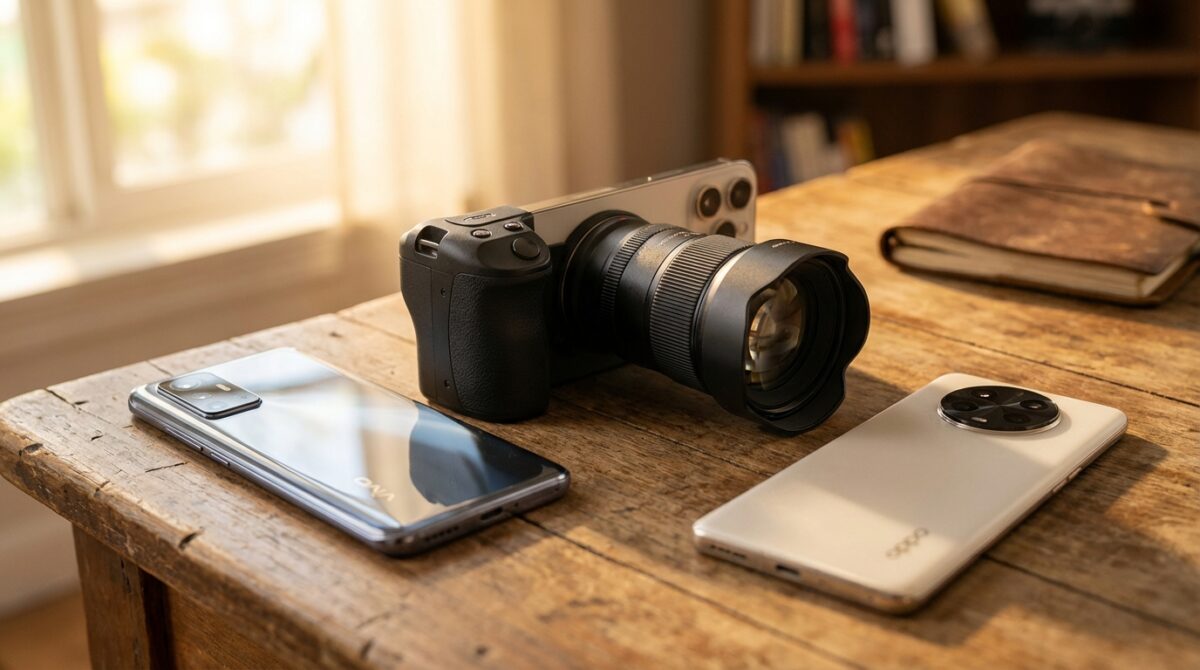
The first time you clip a telephoto extender onto an iPhone and see a distant clock tower suddenly fill the frame, your sense of what a smartphone camera can do changes instantly. That is the promise behind Vivo and Oppo inspired optics now arriving on Apple’s flagship phones through PGYTech’s new RetroVa kit.
How Vivo and Oppo’s telephoto extender idea reached iPhone
When Vivo and Oppo started selling bolt-on telephoto adapters for their flagship phones, many reviewers treated them as niche toys. Then photographers realised those extenders could turn an 85mm smartphone lens into a 200mm equivalent without digital zoom. That single shift in reach changed how people shot travel, sports, and street scenes on their phones.
Accessory maker PGYTech supplied those original Vivo and Oppo adapters and paid close attention to how creators used them. Long-lens portraits, compressed city skylines, and discreet event coverage appeared across social feeds. That feedback loop convinced PGYTech the concept deserved a wider audience. The next logical step was the iPhone, still the reference point for mobile photography in many studios and newsrooms.
Apple watch series 11 returns to the market at an attractive $299 price
This budget-friendly e-reader brims with both challenges and promise
Inside the RetroVa kit that turns iPhone into a compact rig
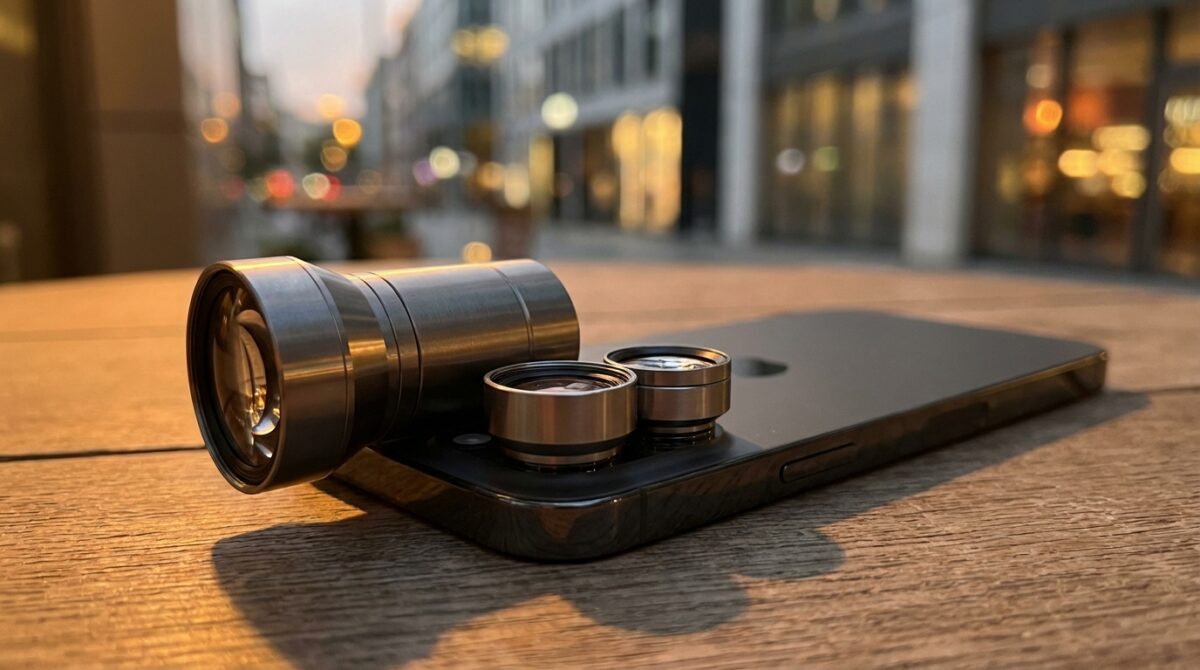
RetroVa is more than a clip-on lens. PGYTech designed a complete ecosystem built around recent iPhone Pro models, echoing what it previously delivered for Chinese flagships. The kit centres on a custom case that provides a rigid mounting rail, a detachable camera grip with an integrated battery, and the 2.35x telephoto extender that sits directly over the existing periscope module.
The grip introduces tactile photography controls that many users miss on touch-only phones. A physical shutter button, a dial for exposure adjustments, and a zoom rocker give the iPhone something closer to a compact system camera feel. A microSD slot in the grip, absent from the Vivo and Oppo bundles, offers extra storage and quick handoff to editors who still rely on card workflows.
What the 2.35x telephoto extender actually changes in your shots
On paper, 2.35x may sound modest, yet the optical impact is significant. Mount the extender over the iPhone 16 Pro’s dedicated telephoto, and your effective focal length jumps into a range once reserved for interchangeable-lens cameras. Distant architectural details become frame-filling elements, and background compression grows far more pronounced.
During testing on Vivo’s X200 Ultra and Oppo’s Find X9 Pro, reviewers reported that the extender preserved fine detail far better than digital zoom at similar framing. Subjects such as statues on cathedral roofs, performers on stage, or wildlife across a park remained crisp after editing. That behaviour carries over to the iPhone version, where the glass design is essentially the same, adapted to Apple’s camera stack.
Limitations, build quality concerns, and the trade-offs you accept
RetroVa’s most important constraint comes from Apple’s software environment. Because the accessory is not officially certified, the iPhone cannot automatically recognise the telephoto extender. PGYTech circumvents this using its own camera application, which forces the correct lens selection and applies tuning for the extra glass. You therefore lose native app integration, quick access from the lock screen, and some computational features.
Hardware durability has raised questions as well. Journalists who tried earlier Vivo and Oppo kits found the optics impressive but called the cases slightly flimsy. PGYTech says it has improved tolerances for the iPhone release, yet the concern influences how you treat the rig. At a starting price near 230 dollars, discounted to around 184 for early crowdfunding backers, buyers will expect ruggedness approaching professional accessories, not a disposable shell.
Who actually benefits from this telephoto technology on iPhone
Not every iPhone owner needs a bolt-on telephoto system. Casual users still obtain strong results from Apple’s built-in zoom and computational processing. The value of a lens extender emerges for specific profiles: event shooters who cover concerts, weddings, or sports from fixed positions; travel creators who want tight frames without carrying mirrorless bodies; and social video producers seeking a distinct compressed look.
Consider Lena, a documentary freelancer who alternates between a Vivo kit and an iPhone 17 Pro for client work. On assignments where security restricts large cameras, she mounts the RetroVa grip, locks the iPhone into PGYTech’s app, and captures 4K telephoto footage of speakers on stage. Her editor appreciates the microSD workflow, while Lena keeps the phone free for messaging once the grip is detached.
How this trend fits a wider shift in smartphone photography
Telephoto adapters are part of a broader debate about whether smartphone camera hardware has plateaued. Articles discussing this trend, such as coverage on MSN about the limits of smartphone camera hardware, suggest that external optics may offer more flexibility than stacking sensors inside ever-thinner bodies. Vivo’s official telephoto extender product page already positions these lenses as modular upgrades rather than temporary experiments.
Reports on upcoming Apple hardware, including speculation around telephoto converters for future Pro models, show that major brands take the concept seriously. Outlets tracking this evolution, like those reporting that Vivo and Oppo’s telephoto extender is coming to iPhone, underline a convergence: ideas tested on Chinese flagships are now shaping accessories for Apple’s ecosystem, and that cross-pollination benefits anyone pushing mobile photography beyond point-and-shoot habits.
Practical buying checklist before adopting a lens extender kit
Before investing in hardware like RetroVa, a simple checklist helps you decide whether it fits your workflow. This also reduces the risk of buying a technically advanced accessory that ends up unused in a drawer after one trip or project.
- Verify that your iPhone model matches the supported Pro devices and telephoto module layout.
- Assess how often you genuinely need optical reach beyond the built-in zoom range.
- Check whether working inside a third-party camera app fits your shooting habits.
- Consider whether a cheaper combination of compact camera and basic phone might serve you better.
- Factor in long-term durability, especially if you travel frequently or shoot in demanding environments.
Does the telephoto extender work with every iPhone model?
No. The current RetroVa kit targets recent Pro models with dedicated telephoto modules, such as the iPhone 16 Pro, 16 Pro Max, 17 Pro, and 17 Pro Max. Other variants lack the correct lens layout or mounting geometry, so the extender would not align properly and image quality would suffer.
Can I use the extender with Apple’s default camera app?
The extender relies on PGYTech’s own camera application to select the correct telephoto module and apply calibration for the added optics. Apple’s stock camera app does not recognise the accessory automatically, so using it there can trigger focus errors or unwanted switching to other lenses.
How much extra zoom does the 2.35x extender provide in practice?
The 2.35x figure multiplies the existing telephoto lens. When mounted on the periscope module of an iPhone Pro, the field of view shifts into a range similar to 200mm glass on a full-frame camera, providing noticeably tighter framing and stronger background compression than the native zoom alone.
Is image quality better than digital zoom on recent iPhones?
Apple’s iPhone 20 in 2027: A Revolutionary All-Glass Design with No Buttons
Xiaomi 17 Ultra Launches at a Steep €1,499 with Battery Life Reduced by 15%?
Tests on Vivo and Oppo phones, along with early iPhone trials, indicate that optical extenders preserve more fine detail and texture than heavy digital zoom at equivalent framing. Results still depend on light level and user technique, but the extender generally produces cleaner files for editing and cropping.
Is the RetroVa kit suitable for professional work?
Many independent creators and some journalists already use similar lens extender kits alongside traditional cameras. For assignments where compact gear is vital, RetroVa can deliver publishable stills and video. However, professionals should treat the case and mounting hardware carefully and test the complete workflow before critical jobs.