
Show summary Hide summary
- Vibe Camera showdown: Why these two models matter
- Design and handling: Pocket feel versus disposable nostalgia
- Core camera features: Filters, flash, and shooting flow
- App experience and digital workflow: Ritual versus efficiency
- Real‑world photography and photo quality in this camera comparison
- Choosing between Camp Snap Pro and Flashback One35 V2
- Key takeaways for vibe‑driven photographers
- Which camera delivers better overall photo quality, Camp Snap Pro or Flashback One35 V2?
- Is the Flashback One35 V2 a good choice for children or beginners?
- Do I need the companion app to use the Camp Snap Pro?
- Can the Flashback One35 V2 shoot RAW for advanced editing?
- Are these vibe cameras better than smartphone cameras for everyday use?
The moment you hand a Vibe Camera to a friend, you see it instantly: people relax, pose differently, and stop obsessing over perfect focus. That shift in behavior is exactly why the Camp Snap Pro and Flashback One35 V2 have become cult favorites among photographers who are tired of clinical smartphone images and want something more tactile, more unpredictable, and frankly more fun.
Vibe Camera showdown: Why these two models matter
Over the past few years, inexpensive digital point-and-shoots with a retro twist have quietly built a serious following. Younger photographers raid flea markets for old compacts, while brands reissue low-spec cameras at modern prices. The Camp Snap Pro and Flashback One35 V2 sit right in the middle of this movement, promising the emotional feel of a disposable film camera with the zero-cost shooting of digital.
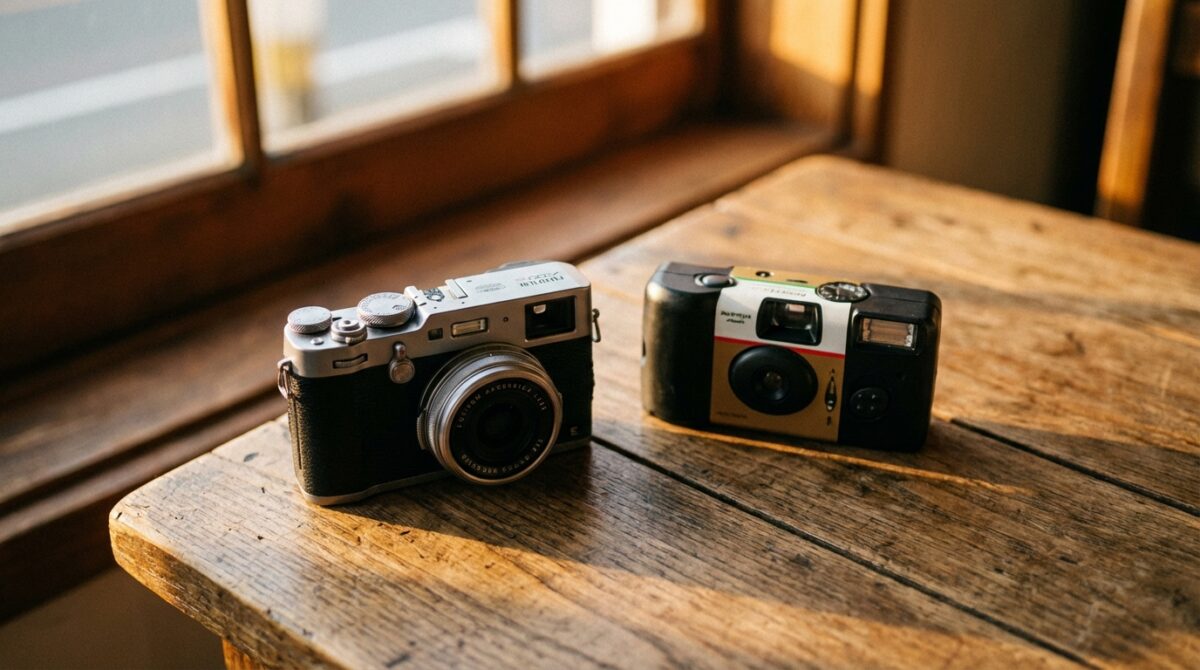
Think of them as instant camera alternatives for people who love the wait and surprise of film, but do not want to pay for processing. The Camp Snap Pro costs around $99 and looks like a tiny all-plastic Fujifilm X100. The Flashback One35 V2 lands closer to $119 and deliberately imitates a classic single-use film camera, right down to a faux advance dial and “rolls” of 27 photos. Both target the same user, yet they take very different routes to get there, which makes this camera showdown unusually revealing for anyone curious about lo-fi photography.
Lenovo Idea Tab: A Reliable Everyday Tablet Choice
A Step-by-Step Guide to Sending Messages via Satellite on Your iPhone
Design and handling: Pocket feel versus disposable nostalgia
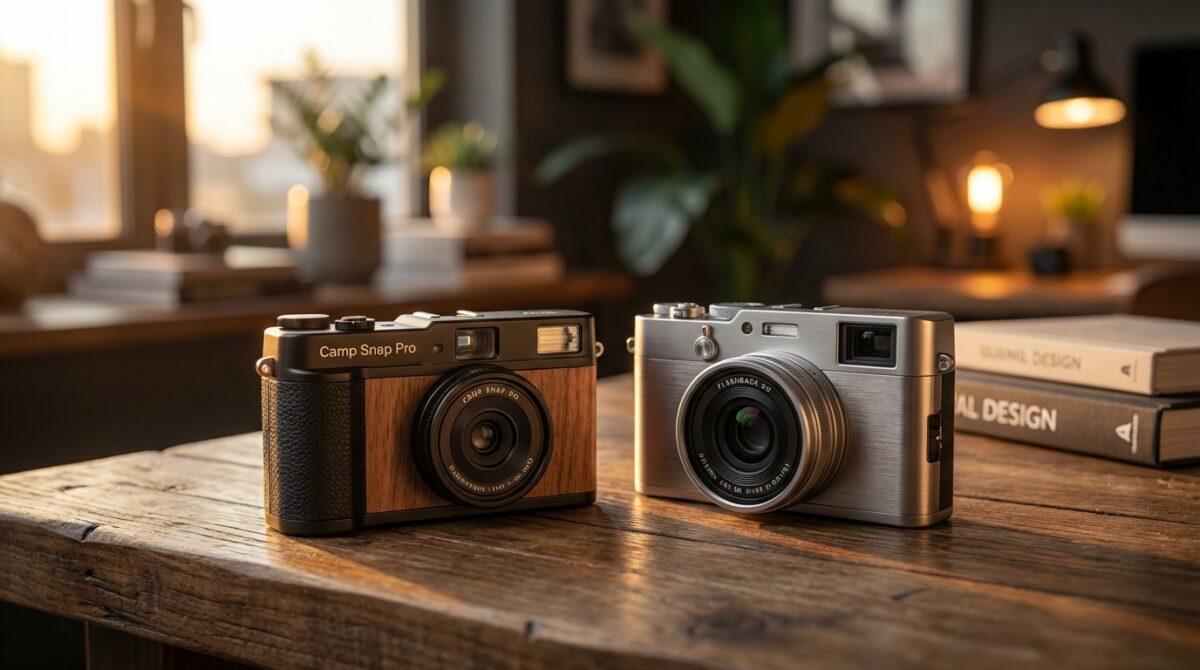
When you pick up each device, the difference in philosophy appears before you even press the shutter. Both are made from lightweight plastic and feel intentionally un-precious. They are designed to be tossed into a tote bag or jacket pocket without anxiety. The Camp Snap Pro is slightly larger, roughly the footprint of a classic compact camera, while the Flashback One35 V2 is closer to a true disposable, smaller and a bit easier to slip into a back pocket.
For a fictional example, imagine Sara, a designer who documents her city walks. With the Camp Snap Pro, she benefits from a basic but practical grip, a tripod mount, and simple top dials. She can set it up on a small tripod to photograph herself and friends in a café without balancing the device on a stack of books. The Flashback One35 V2, in contrast, trades practicality for character. Its chunky grip looks comfortable, yet the lens sits so close to that grip that many users find their fingers creeping into the frame. The body is cute enough to attract comments, but the ergonomics can undercut spur-of-the-moment photography.
Core camera features: Filters, flash, and shooting flow
Technical specifications are not the primary draw here, yet they still shape the daily experience. The Camp Snap Pro uses a 16‑megapixel sensor behind a 22.5mm-equivalent lens, meaning you get a relatively wide field of view well suited to group photos and casual street scenes. The Flashback One35 V2 uses a 13‑megapixel sensor, again in the phone-sized territory. Both sit far below modern flagship smartphones in resolution and dynamic range, which is exactly the point: they create images that feel imperfect and nostalgic.
Where the Camp Snap Pro separates itself is operational flow. A top dial lets you flick between four film-style profiles on demand: standard, two vintage looks with different color casts, and monochrome. Each of these can be replaced using an online filter builder, echoing how film photographers once chose specific emulsions. The camera comes with a 4GB microSD card, enough for more than 1,000 photos, and transfers happen through USB‑C or card reader. The Flashback One35 V2 also offers four looks but treats them as “rolls” of 27 frames that must be selected and locked in through its companion app. This design creates a ritual similar to loading a physical film, yet it also introduces friction when you just want to react quickly to whatever appears in front of you.
App experience and digital workflow: Ritual versus efficiency
The biggest philosophical divide lies in how both cameras manage images after you press the shutter. The Camp Snap Pro avoids apps entirely. You shoot, you forget about the photos for a while, then you later plug the camera into a laptop or use the included microSD card. This approach feels close to dropping a roll at a lab, yet it never blocks you from continuing to shoot. There is no waiting period, no pairing process, and no account creation to worry about when traveling or handing the device to a child.
The Flashback One35 V2 doubles down on simulation of analog photography. Its app for iOS and Android lets you choose your “film type,” trigger a self-timer, check battery level, and even capture RAW (DNG) files for editing. By default, images stay “undeveloped” for 24 hours in the app, echoing lab turnaround. For the first roll or two this delay feels charming, especially if you enjoy suspense. Over time, many users activate the instant development mode, effectively bypassing that design choice. Reviews such as the detailed analysis on Magnetic Magazine’s comparison of the two cameras often highlight how this ritual starts as delightful and then becomes a source of missed opportunities once you hit the 27‑shot limit and must stop shooting until you offload images.
Real‑world photography and photo quality in this camera comparison
On paper, a difference between 16 and 13 megapixels looks minor, but side‑by‑side images tell a clearer story. The Camp Snap Pro usually delivers sharper edges, better detail in daylight, and slightly cleaner noise patterns in dim scenes. Faces look a bit more defined, and city textures such as bricks or tree branches retain more structure. It still looks like a lo‑fi digital file, somewhere between an early smartphone and a scanned disposable negative, yet it holds up well on laptops and small prints.
The Flashback One35 V2 leans further into softness. Many samples show a hazier rendering, less micro‑contrast, and a tendency for highlights to bloom around light sources. In bright daylight this can feel dreamy. In low light it can collapse into a mush of color and noise where expressions disappear. Some users in enthusiast communities even prefer the first One35 model because its flaws feel more consistent. According to coverage such as The Verge’s extended camera comparison, the Camp Snap line, including the older model, repeatedly beats the Flashback on reliability of output, even if both sit far from clinical digital standards.
Choosing between Camp Snap Pro and Flashback One35 V2
When you step back from specifications and look at everyday use, the choice becomes more about personality than pure tech. The Camp Snap Pro behaves like a practical everyday companion. You turn it on, rotate a dial for your preferred vibe, and shoot hundreds of frames without thinking about storage, pairing, or arbitrary limits. It suits parents who want an instant camera substitute for vacations, creators who like pre‑cooked color looks for social media, and anyone who simply wants a screen‑free device that “just works.”
The Flashback One35 V2 targets a narrower audience. If you enjoy the idea of committing to a 27‑frame “roll,” waiting for virtual development, and occasionally dealing with quirks like film styles failing to load, you may find it uniquely charming. The app’s RAW option provides a path for editing enthusiasts who want to wrestle more detail from the files. For many people though, the slow wake‑up advance dial, the blocked shooting after a roll finishes, and the finger-in-frame design issues outweigh the charm. Photographers who already follow digicam trends and browse lists of top cameras to watch in 2026 tend to view the Camp Snap Pro as the safer, more versatile investment in this specific camera showdown.
Key takeaways for vibe‑driven photographers
If you are still unsure which path matches your style, it helps to focus on behaviors rather than marketing promises. Ask yourself how willing you are to tolerate friction for the sake of nostalgia, and how often you will hand the device to less technical friends or family. A short checklist can clarify priorities and turn a vague preference into a clear decision.
Consider the following when choosing your next Vibe Camera for casual photography:
- How often you want to switch film-style looks during a single outing.
- Whether you prefer an app-free workflow or enjoy app-based “developing.”
- Your tolerance for missed shots caused by slow controls or wake-up times.
- Whether a tripod mount, microSD storage, and USB‑C transfers matter to you.
- How important it is that an instant camera alternative can be used safely by kids.
Which camera delivers better overall photo quality, Camp Snap Pro or Flashback One35 V2?
In most situations, the Camp Snap Pro produces sharper, cleaner images than the Flashback One35 V2. Its 16‑megapixel sensor and 22.5mm‑equivalent lens provide more detail and slightly better low‑light performance. The Flashback’s softer rendering can feel dreamy, but it is less consistent, especially when lighting becomes challenging.
Is the Flashback One35 V2 a good choice for children or beginners?
The Flashback One35 V2 is less suited to children because it requires app pairing, uses 27‑shot virtual rolls, and stops working once a roll is full until images are offloaded. The slow advance dial can also cause missed moments. For beginners or kids, the simpler Camp Snap Pro is usually a more forgiving option.
Do I need the companion app to use the Camp Snap Pro?
No. The Camp Snap Pro works completely without a mobile app. You switch film-style profiles using the camera’s dial and store images on the included microSD card. When you want your photos, you connect via USB‑C or use a card reader, which keeps the experience screen‑free while you are shooting.
Can the Flashback One35 V2 shoot RAW for advanced editing?
Transform Your Phone Photos Into Warm, Dreamy Analog Film Masterpieces With These 3 Easy Tricks
Apple Explores Red as the Next Premium Hue for Upcoming iPhones
Yes, the Flashback One35 V2 can capture DNG RAW files through its companion app, which appeals to photographers who like to fine‑tune colors and contrast in software. The Camp Snap Pro only records JPEG files, prioritizing simplicity and predesigned looks over extensive post‑processing flexibility.
Are these vibe cameras better than smartphone cameras for everyday use?
Smartphones still offer higher resolution, better dynamic range, and powerful computational photography. Camp Snap Pro and Flashback One35 V2 win in experience rather than pure quality. They encourage slower, more intentional shooting, create a distinct lo‑fi aesthetic, and remove the urge to review every frame, which many users find creatively refreshing.