
Show summary Hide summary
- How the Nintendo Switch became Nintendo’s top-selling console
- A unified Nintendo: One platform, many blockbuster games
- Hybrid design and Joy-Con: Redefining portable gaming habits
- From hit console to entertainment ecosystem beyond video games
- Switch 2, pricing pressures, and the next chapter for Nintendo
- Key lessons from the Switch for the gaming industry
The Nintendo Switch did not just sell well; it rewired how players think about a gaming console. Hybrid play, marathon portability, and a library that never seemed to slow down turned one risky idea into Nintendo’s top-selling system and a template for its future.
How the Nintendo Switch became Nintendo’s top-selling console
When Nintendo launched the Nintendo Switch in 2017, many analysts saw it as a bold attempt to fix the disappointment of the Wii U. The company fused its history in handhelds with its home systems and bet everything on one hybrid console. That gamble has now produced more than 155 million units sold, overtaking the Nintendo DS and every other machine in the company’s history.
Reports such as recent coverage on Nintendo Life confirm the scale of this success and place the Switch just behind Sony’s PlayStation 2 worldwide. For a company that once struggled to convince families to upgrade from the Wii, this turnaround is striking. The Switch did not rely on raw power or technical spectacle. Instead it leaned on flexibility, strong branding, and a relentless cadence of system-selling video games.
JLab Unveils Innovative Bluetooth Speaker That Transforms Into Giant Headphones
Google Home Enhances User Interaction with New Button Support
A unified Nintendo: One platform, many blockbuster games
The Switch era started with a quiet structural change inside Nintendo that had dramatic effects on players. In 2013, the company merged its handheld and home-console development divisions, previously responsible for Game Boy and DS on one side and NES, Wii, and Wii U on the other. This decision meant every internal team now fed a single hardware family instead of splitting resources and ideas across two product lines.
That reorganization paid off when the hybrid console arrived. From 2017 onward, Nintendo delivered a stream of global hits that each helped anchor the system. The Legend of Zelda: Breath of the Wild redefined open-world exploration. Mario Kart 8 Deluxe became the default multiplayer choice for many households. Animal Crossing: New Horizons turned the Switch into a social lifeline during global lockdowns, while Super Smash Bros. Ultimate and Super Mario Odyssey pushed both competitive and family-friendly play. Each of these titles crossed 30 million copies sold, creating a stable base of users who then explored smaller games.
Hybrid design and Joy-Con: Redefining portable gaming habits
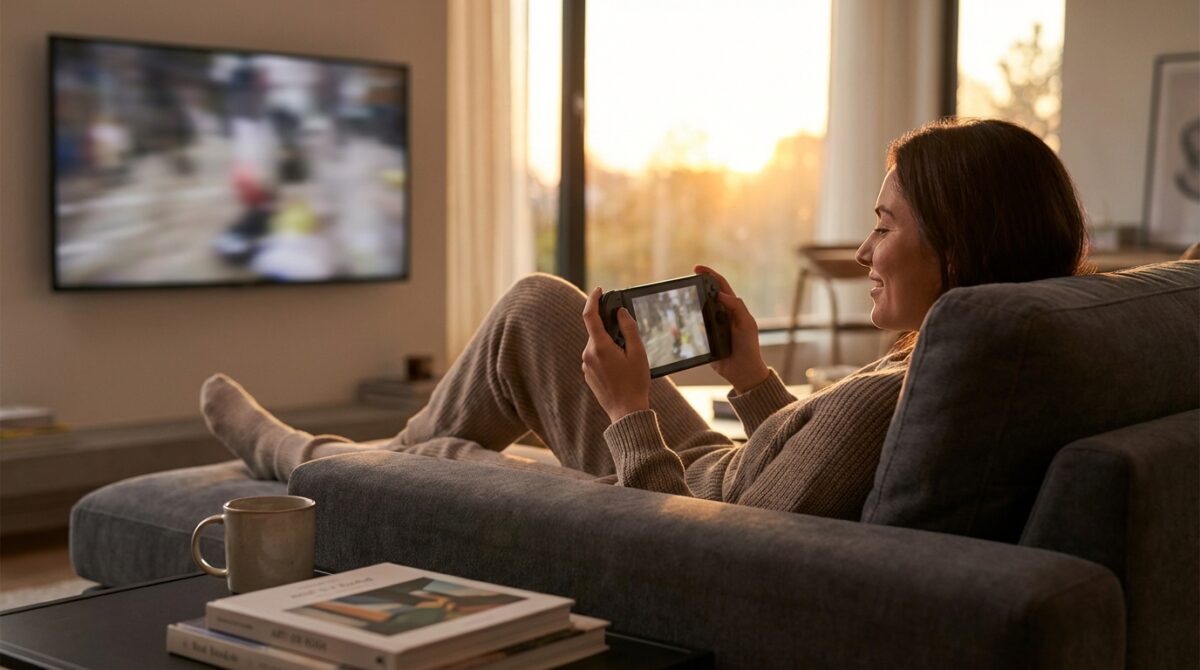
The hardware itself changed how and where people play. The Switch is a hybrid console that can sit in a dock connected to a TV, then slide out instantly for portable gaming. This dual identity solved a long-standing dilemma for Nintendo fans such as our fictional player Maya, who once bought a home console for living-room sessions and a separate handheld for commutes. With one device, Maya could grind an RPG on the train, then continue the same session on a large screen at home.
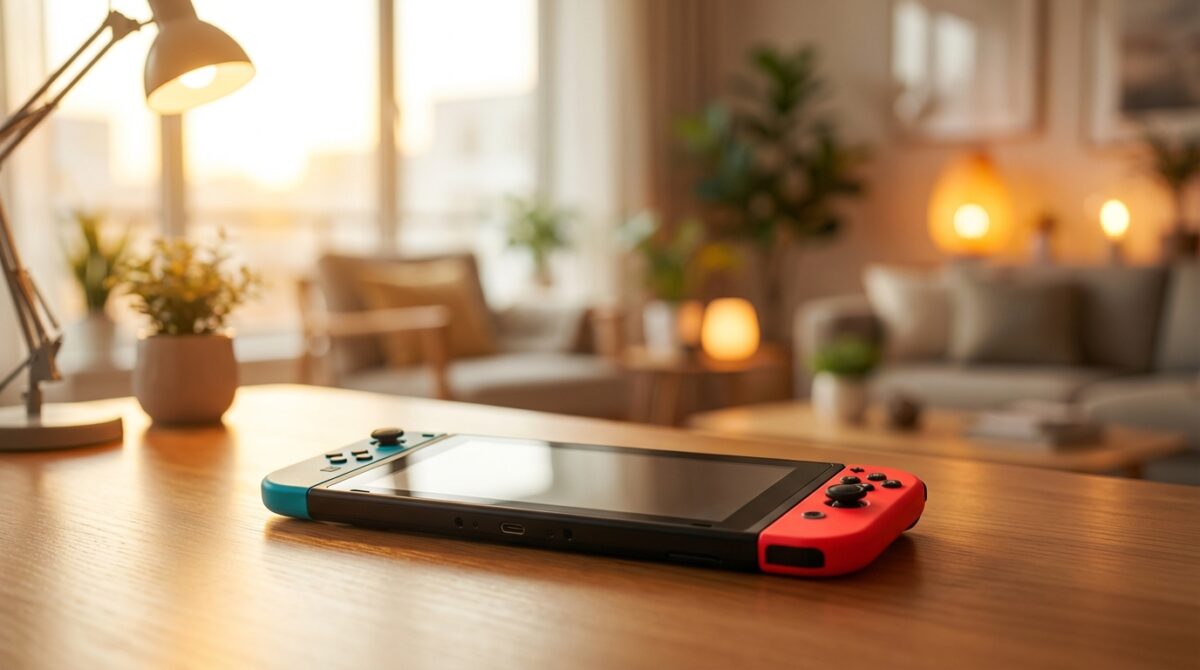
The detachable Joy-Con controllers added another twist. Each side can function as an individual controller, turning any table into an instant multiplayer arena. A café break becomes a quick round of Mario Kart, while an office lunchroom can host spontaneous Super Smash Bros. battles. This frictionless local multiplayer experience helped the console spread socially, as one owner effectively brought a complete party kit wherever they went.
From hit console to entertainment ecosystem beyond video games
Nintendo did not treat the Switch surge as a one-off. Instead, the company used this stable hardware base to expand far beyond the plastic device in your bag. In cinemas, The Super Mario Bros. Movie released in 2023 and crossed the one-billion-dollar mark at the global box office. That success encouraged Nintendo to approve a sequel and a live-action adaptation of The Legend of Zelda, signalling long-term ambitions in film rather than isolated experiments.
Physical spaces evolved as well. Super Nintendo World opened first in Japan in 2021, then later in Hollywood and Florida, with Singapore announced as another destination. These parks turned familiar game worlds into real attractions, reinforcing character recognition for visitors who might not even own a console. Nintendo even opened a company museum in Kyoto in 2024, curating its hardware history from playing cards to the Switch. Together, these moves show a company that sees itself in the same conversation as big entertainment groups, not only in competition with Sony and Microsoft.
Switch 2, pricing pressures, and the next chapter for Nintendo
Success on this scale creates its own expectations. The follow-up, often called Switch 2 in reports such as those on Engadget and similar outlets, launched with impressive momentum. Nintendo paired the hardware with a fresh Mario Kart entry and strong early titles from Donkey Kong and Metroid, reducing the quiet launch periods that hurt earlier systems. The unified development structure again helped, as teams could move from late Switch projects directly into the new generation.
The broader gaming industry, however, looks less predictable. Component costs, inflation, and supply-chain volatility have pushed some rival machines to become more expensive as they age instead of cheaper. That trend complicates planning for a hybrid console designed to feel accessible. Nintendo now aims less at repeating 155 million units and more at sustaining its network of fans, theme-park visitors, and film audiences. The company can afford for Switch 2 to sell fewer units than its predecessor if it keeps players like Maya engaged across hardware, services, and stories.
Key lessons from the Switch for the gaming industry
For anyone watching the gaming industry professionally, the Switch story offers a practical playbook. A risky hybrid console turned into Nintendo’s top-selling hardware because multiple decisions aligned: internal restructuring, a focus on versatile design, and consistent, high-impact software. Competitors now study this example as they design devices that blur the line between handheld and living-room machines.
Several takeaways stand out for hardware makers and studios looking ahead:
- Tie hardware identity to daily life, as the Switch did with portable gaming that slips easily between home and travel.
- Invest early in a few clear flagship video games that show different strengths of the device, from open-world exploration to local multiplayer.
- Unify internal teams around one platform when possible, reducing duplication of effort across handheld and home machines.
- Build entertainment extensions, such as films or theme parks, only once a stable hardware audience exists.
- Plan for pricing volatility by treating each console as a gateway into a wider ecosystem, not the only source of revenue.
These lessons suggest that hardware success can act as a springboard rather than a peak. The Nintendo Switch shows how a single hybrid console, supported by Joy-Con experimentation and an aggressive release schedule, can turn temporary popularity into a long-term entertainment strategy.
How many Nintendo Switch units have been sold worldwide?
As of the latest financial updates, the original Nintendo Switch has sold around 155 million units globally, surpassing the Nintendo DS and becoming Nintendo’s best-selling console. This total makes it the second best-selling gaming console in history, behind Sony’s PlayStation 2.
Why is the Nintendo Switch considered a hybrid console?
The Switch is called a hybrid console because it functions as both a traditional living-room system and a portable device. Players can dock it to play on a television or remove the console from the dock and use its built-in screen, continuing the same game session on the go.
What role did Joy-Con controllers play in the Switch’s success?
Joy-Con controllers detach from the main screen and can work separately, allowing two people to play multiplayer games with a single console. This design lowered the barrier to local multiplayer, made spontaneous sessions easy, and helped spread the system socially in homes, offices, and public spaces.
Is the Switch 2 expected to outsell the original Switch?
Amazon’s Compact Echo Show 8 Hits Record Low Price – Perfect for Your Desk!
Why the Telephoto Lens Is the Unsung Hero of Smartphone Photography
Analysts do not expect the successor to automatically match the original Switch’s lifetime sales. Nintendo’s priority appears to be maintaining momentum across games, parks, and films. The new system is considered successful if it keeps players engaged within the broader Nintendo ecosystem, even with lower unit sales.
How has the Switch changed Nintendo’s business strategy?
The Switch era encouraged Nintendo to rely on a single main hardware line instead of separate handheld and home systems. The strong user base also supported expansion into movies, theme parks, and museums, shifting Nintendo’s profile from a pure gaming company toward a wider entertainment brand.