
Show summary Hide summary
- Why pan/tilt security camera features often disappoint at home
- Network video recorders and LTE: heavy solutions most homes can skip
- 4K resolution, spotlights and enclosures: when more is simply too much
- Cloud storage, AI extras and the real feature importance debate
- How to design a lean, effective security camera setup
- Checklist: which camera features to prioritize or skip
- Do I really need a 4K security camera for my home?
- When is a pan/tilt camera actually useful instead of overkill?
- Should I choose cloud storage or a microSD card for my footage?
- Are spotlight cameras better than floodlight models at night?
- Is an LTE security camera helpful if my Wi‑Fi is unreliable?
Imagine trimming your security camera setup by half and still feeling safer. The secret rarely lies in more megapixels or extra lights but in knowing which useless features quietly drain your budget and bandwidth without adding real protection.
Once you start looking at security technology through that lens, flashy marketing loses its grip. You begin to see camera functionality as a toolbox instead of a catalog, and you only keep the tools that genuinely help you spot intruders, protect deliveries, or monitor family members. That mindset is what guided Maya, a homeowner who replaced a chaotic mix of cameras and hubs with a lean, reliable system that actually alerts her only when something matters.
Why pan/tilt security camera features often disappoint at home
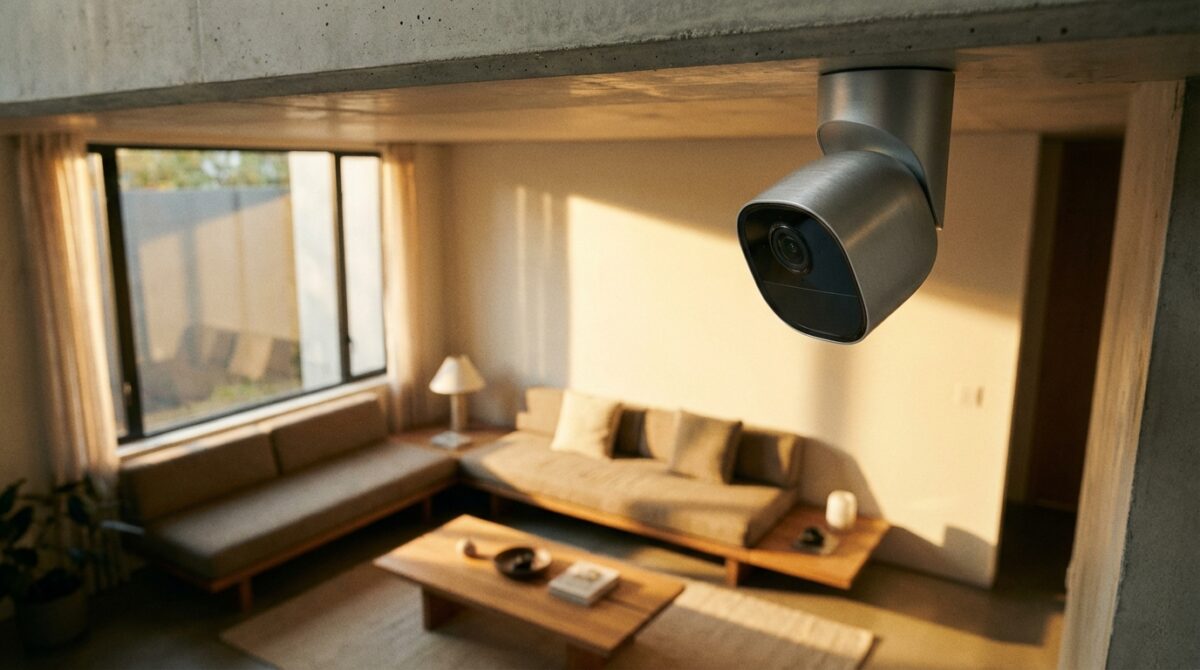
Pan/tilt sounds powerful on the box: almost 360-degree coverage, tracking movement, always sweeping the room. In a practical home environment, those camera settings create more frustration than value. Wide-angle lenses around 130 degrees already cover most living rooms, patios, or driveways once you position them thoughtfully near a corner or above a door.
Spotify Liquid Death Urn: Groove Beyond the Grave
MWC Barcelona Anticipating 2026’s Tech Innovations
Maya learned this the hard way. Her first indoor camera followed her dog constantly, so playback looked like a shaky documentary, not usable surveillance. When she switched to a fixed-lens model with smart motion alerts, she captured clear clips of the front door and hallway without ever touching the controls. The feature importance of pan/tilt, in her case, dropped to nearly zero once placement and field of view were optimized.
Where pan/tilt creates problems instead of clarity
Rotating mechanisms introduce more moving parts that can fail, rattle, or freeze in winter. Every extra motor increases wear, and long-term camera review data from installers often shows higher failure rates on pan/tilt heads compared with fixed domes. When the camera moves, your motion zones also shift, so you may miss events near doors while it tracks something irrelevant in another direction.
For most homes, static lenses paired with smart person detection provide a cleaner approach to surveillance. You receive short clips focused on the right doorway or gate, not a sweeping panorama that demands manual scrubbing. Only large open-plan lofts or warehouses really justify pan/tilt, and those are closer to commercial scenarios than typical households.
Network video recorders and LTE: heavy solutions most homes can skip
Older guides treated NVRs as mandatory for serious security camera systems. That era has largely passed. Modern microSD cards hold over a terabyte of video, and many brands combine on-device storage with cloud backups, removing the need for a bulky recorder box under your router. For Maya, the NVR she bought in 2020 ended up as a dust collector once she upgraded to compact Wi‑Fi cameras with local storage.
NVR-based surveillance often requires Power over Ethernet cabling, drilling through walls, and managing a dedicated switch. Such infrastructure makes sense in offices, parking garages, or retail spaces, not in a two-bedroom apartment. When you compare total cost, a handful of standalone Wi‑Fi cameras with SD cards often beat NVR kits on both simplicity and resilience.
LTE cameras: niche heroes, poor everyday choice
LTE security camera models look attractive if you fear Wi‑Fi outages, yet they introduce monthly data plans and higher upfront prices. Their real strength lies in remote building sites, barns, or off-grid cabins where broadband never reaches. For a standard suburban home, a robust router or a quality range extender usually delivers more value than cellular video streaming.
Writers at outlets like Digital Trends and How-To Geek repeatedly highlight this trade-off: stability issues are better solved at the network level than with expensive LTE cameras. If power cuts worry you, a small UPS battery that keeps the router and key cameras online typically provides better efficiency than signing up for a SIM card in every unit.
4K resolution, spotlights and enclosures: when more is simply too much
On paper, 4K sounds like the logical next step in security technology. Higher resolution promises sharper faces and license plates. In daily use, those pixels come at a cost: extra bandwidth, heavier cloud bills, and more frequent storage upgrades. Many recent camera review summaries indicate that 2K resolution offers a sweet spot where you can still zoom in for detail without overwhelming your network.
Maya tested a 4K model pointed at her driveway. Streaming to her phone stuttered whenever someone rang the doorbell because the camera saturated her Wi‑Fi. After she lowered the resolution to 2K, live view became smooth again, and the difference in practical evidence capture was minimal. Paying for a 4K badge only to dial it down later is one of those skip features that quietly waste money.
Lighting add-ons and housings that look tough but add little
Spotlights attached to cameras promise deterrence and better images. However, many entrances already have porch lights, and recent low-light sensors and infrared LEDs deliver surprisingly bright footage without visible beams. A dedicated floodlight camera above a driveway or yard usually beats scattered tiny spotlights in both coverage and longevity.
Protective enclosures follow the same pattern. Most outdoor units ship with IP64 or IP65 ratings, surviving rain, dust, and moderate frost without extra shells. Unless you live in extreme polar conditions or face repeated vandalism, those boxes just collect dirt and cobwebs. A simple bird guard or small visor often handles nesting birds better than a full cage, keeping the camera lens clear and maintenance low.
Cloud storage, AI extras and the real feature importance debate
Unlike many truly useless features, cloud storage sits in a grey zone. Its value depends on your habits and tolerance for subscriptions. Brands such as Nest or Arlo often reserve advanced AI, extended history, and rich video search for paid tiers, turning storage into a service bundle rather than a simple backup option. Local SD storage, by contrast, offers a one-time purchase with stronger privacy but more manual housekeeping.
Maya settled on a hybrid approach. Important entrance cameras record to the cloud, where she can quickly share clips with neighbors or insurance. Less critical units, like the one watching the garden, write to SD cards only. Articles on CNET and AI Time Journal underline the same pattern: choose storage according to risk level and collaboration needs rather than defaulting to every upsell.
AI summaries and advanced recognition: useful, yet easy to oversell
Generative AI summaries, object tags, and face clues now appear in premium camera settings. In practice, these tools mostly shine when you must review long timelines quickly, for instance after a break-in or package theft. They highlight “person near car” or “dog in backyard” clips so you do not scroll for hours.
However, these extras usually lock behind pricier plans, and some owners barely open their apps except during rare incidents. For them, the core advantage still lies in reliable alerts and solid optics, not futuristic dashboards. As with smart-home assistants or the latest Apple HomeKit gadgets, the safest strategy is to test whether advanced AI actually changes your behavior before paying for long-term access.
How to design a lean, effective security camera setup
Once you strip away unnecessary extras, planning becomes clearer. Instead of chasing every spec, you map real risks: unlocked side gates, dark alleys, vulnerable windows, deliveries left in public view. That threat map tells you where a camera will pay off, which angles matter, and how many units you truly need. Security technology then feels purposeful rather than decorative.
Maya rebuilt her system using this mindset and ended with fewer devices but better coverage. She focused spend on strong Wi‑Fi, reliable power, and a couple of high-quality 2K cameras with person detection. No NVR, no LTE, no spotlight gadgets. The result was fewer false alerts and a setup she actually understands and maintains.
Checklist: which camera features to prioritize or skip
A simple decision list helps you avoid impulse purchases and focus on efficiency. Before buying your next security camera, walk through these points:
- Prioritize wide field of view (around 120–130 degrees) over pan/tilt motors.
- Choose 2K resolution and only move to 4K for very specific identification needs.
- Use Wi‑Fi with a good router or extender instead of defaulting to LTE models.
- Favor floodlight cameras in large outdoor areas, not small integrated spotlights.
- Rely on built-in IP-rated weather protection; add housings only in extreme environments.
- Pick storage (cloud, local, or both) based on how often you share or audit footage.
- Treat advanced AI and summaries as optional add-ons, not must-have basics.
If a feature does not clearly help you answer “who was there, when, and what happened,” it probably belongs on your personal list of skip features. Building around that simple question keeps your system sharp, affordable, and ready for the rare moments when it truly matters.
Do I really need a 4K security camera for my home?
For most homes, 2K resolution provides enough detail to recognize faces and events without overloading your Wi‑Fi or storage. 4K mainly helps in specialized cases, such as monitoring long driveways or zooming in on license plates at a distance. If you do not routinely need that level of detail, a high-quality 2K camera is usually a better investment.
When is a pan/tilt camera actually useful instead of overkill?
Pan/tilt makes sense in very large open spaces, such as warehouses, barns, or big open-plan lofts, where a fixed lens cannot cover all angles. It can also work in commercial surveillance, where an operator manually controls views. In typical homes with smaller rooms and corridors, a well-placed fixed camera usually offers simpler and more reliable coverage.
Should I choose cloud storage or a microSD card for my footage?
Cloud storage offers convenient remote access, easy sharing, and advanced AI options, but it requires ongoing subscription fees. A microSD card provides private, local storage with a one-time cost, although you must manage capacity and backups yourself. Many homeowners mix both, using cloud for key entrances and SD cards for less critical views.
Are spotlight cameras better than floodlight models at night?
Samsung Galaxy Ultra: Vital Features & Specs Compared
Comparing Samsung Galaxy Ultra: S26, S25 & S24 Differences
Spotlight cameras illuminate a small area and can drain batteries quickly when triggered often. Floodlight cameras generally cover larger zones and provide more consistent lighting for video capture and safety. If you already have good ambient lighting or strong night vision on your camera, you may not need either and can disable the extra light entirely.
Is an LTE security camera helpful if my Wi‑Fi is unreliable?
LTE cameras can help in locations with no broadband, such as cabins or construction sites, but they come with higher hardware prices and data plans. In a normal home, improving your network—using a better router or mesh system—usually delivers more value. A small backup battery for the router can also maintain connectivity during short power cuts.