
Show summary Hide summary
- How the Eternal Playlist Urn turns death into a music moment
- Inside the tech: music-streaming meets memorial design
- The Eternal Playlist Generator and your afterlife soundtrack
- Why this odd urn resonates with grief, humor, and digital identity
- What this collaboration tells you about the future of music and death
- How individuals and families might actually use such a device
- How does the Eternal Playlist Urn actually play music?
- Do you need a special Spotify account for the urn?
- Is the Eternal Playlist Urn only a marketing stunt?
- Can you use the urn as a normal speaker without ashes?
- Where can you learn more about the urn collaboration?
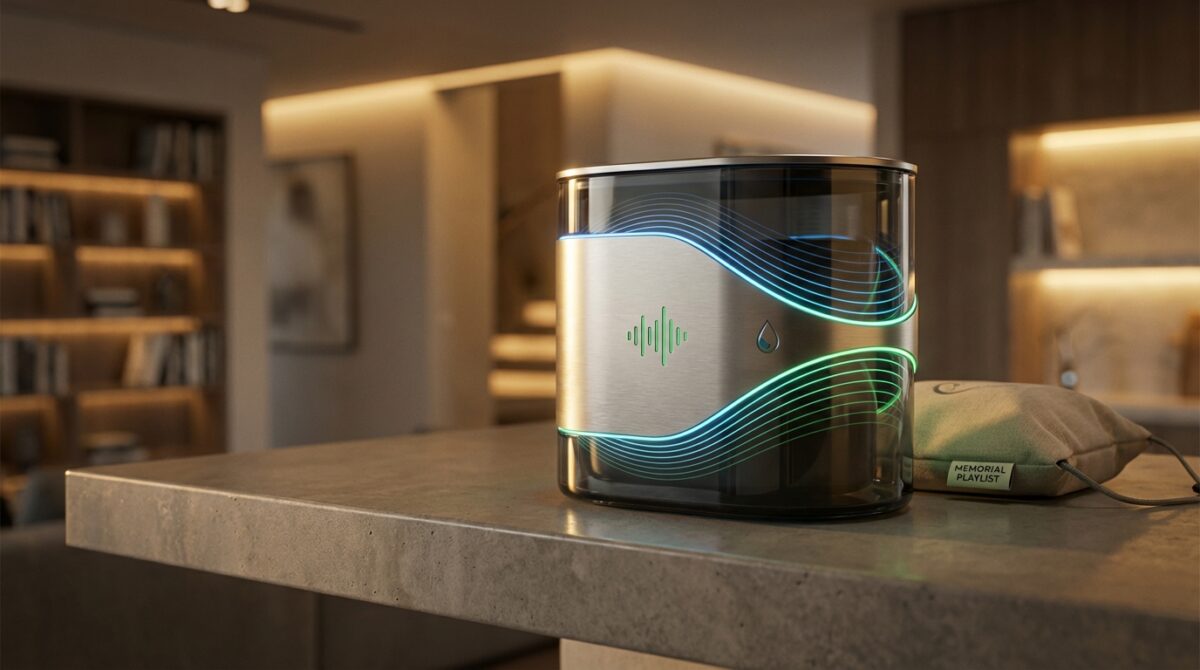
Someone had to ask it one day: if your playlist survives you, why should your speakers stop at the funeral? Spotify and Liquid Death decided the answer should be loud, strange, and a little funny. Their Eternal Playlist Urn blends music-streaming, dark humor, and grief rituals into one object that people cannot stop talking about.
How the Eternal Playlist Urn turns death into a music moment
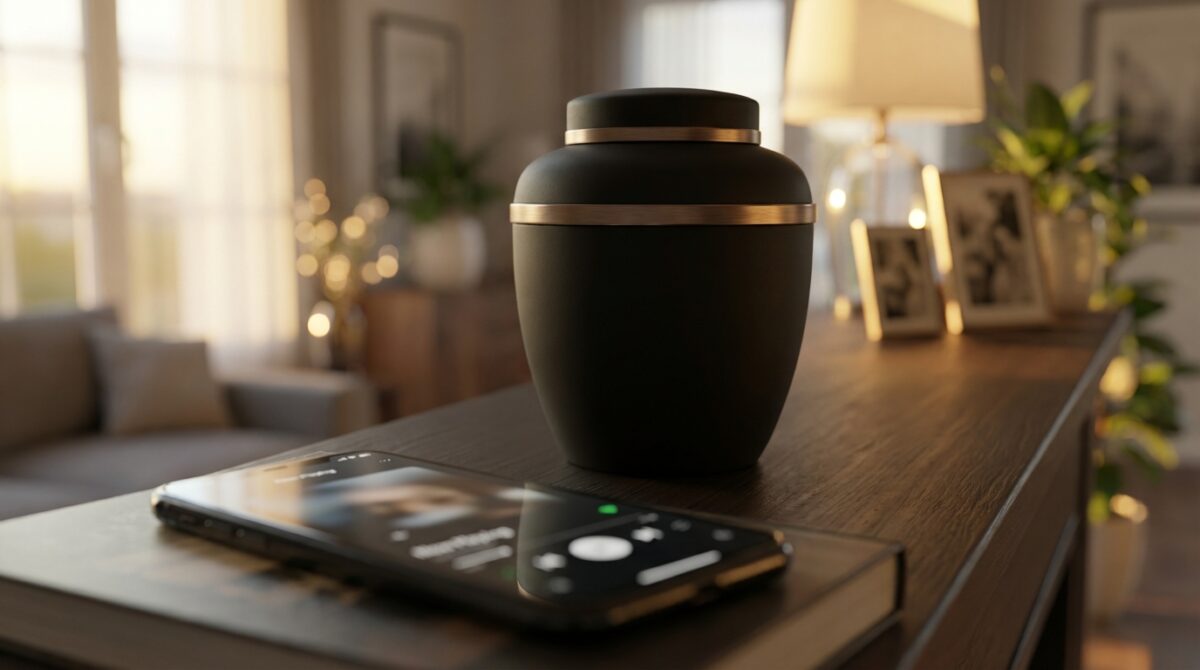
The Eternal Playlist Urn is exactly what it sounds like: a cremation urn that doubles as a wireless speaker. Spotify and Liquid Death designed it as a limited-edition object for people who treat music as part of their identity, even beyond the afterlife. The urn stores ashes, yet also syncs with your phone like any other Bluetooth device.
Inside the lid sits a compact Bluetooth speaker powered through USB-C, so it charges with the same cable as most modern phones and laptops. Owners connect it to Spotify on a phone or tablet, choose a playlist, and the urn starts grooving from the mantle or wherever the family displays it. The idea is half sincere tribute, half tongue‑in‑cheek commentary on how digital culture follows us everywhere.
MWC Barcelona Anticipating 2026’s Tech Innovations
Samsung Galaxy Ultra: Vital Features & Specs Compared
A $495 collector device for people who live in playlists
Liquid Death announced that only 150 Eternal Playlist Urns would be produced, each priced at $495. That places it closer to a design object or limited art piece than a standard audio gadget. Fans of the brand already buy cans for the theatrical skull art and morbid names like Berry It Alive or Severed Lime, so a premium urn fits this offbeat universe.
The price signals intention: this is not a mass-market speaker disguised as an urn. It is positioned as a conversation starter for music obsessives and families who prefer a less solemn, more personal memorial. Media coverage from outlets such as CNET and other tech publications framed it as both a marketing stunt and a real product, which is exactly the edge Liquid Death and Spotify like to occupy.
Inside the tech: music-streaming meets memorial design
From a technical perspective, the Eternal Playlist Urn behaves like a compact wireless speaker with a very unusual enclosure. You pair it through Bluetooth, then stream tracks from the Spotify app, just as you would to any portable speaker. There is no screen, no direct app integration on the urn itself, and no complex controls that might confuse older relatives.
This simplicity matters in a sensitive context. Families often juggle logistics, emotions, and rituals during and after a funeral. A device that just turns on, connects, and plays reduces friction. The urn can sit quietly as a symbolic object when music is off, then become the sonic center of a remembrance evening when someone starts an Eternal Playlist on their phone.
Practical details that make it more than a joke
Behind the humor lies careful design. The Bluetooth module is placed in the lid, away from the ashes compartment, so the object still respects its primary role as an urn. USB-C charging means families do not need a proprietary cable at a stressful time. The speaker is tuned for intimate indoor listening rather than party volume, which suits memorial gatherings or quiet reflection.
Some families might never place ashes inside and instead use it as a symbolic sculpture for a late relative who loved music. Others may display it on a shelf where Grandpa’s remains already sit. In either case, the music-streaming function adds a layer of interaction. Sound becomes part of how people remember a personality, not only through photos and stories, but also through favorite tracks emerging from the urn itself.
The Eternal Playlist Generator and your afterlife soundtrack
To support the urn, Spotify created the Eternal Playlist Generator, a playful experience available through its mobile app. Rather than asking you to search endlessly for tracks, the tool builds what it imagines you would want looping across eternity. You answer a handful of surreal questions, then an algorithm assembles songs that match your self-described afterlife mood.
Questions include prompts such as “What is your eternal vibe?” with options like very, very chill or more energetic choices. Another asks you to complete “Rest in _____”, where some users pick “bass” instead of “peace”. The quiz continues with “What is your getting-ready-to-haunt music?” and “What is your go-to ghost noise?”. Each answer nudges the playlist toward certain moods, tempos, and genres.
From ghost noise to Bruno Mars: a playful data story
One early tester who chose very chill vibes, Rest in bass, pumped-up haunting tracks, and a theatrical ghost sound received a playlist featuring artists such as Sabrina Carpenter, Charlie Puth, and Bruno Mars rather than only sad ballads. This demonstrates how Spotify leans into listening patterns instead of cliché death songs like classic rock odes to mortality.
The Eternal Playlist Generator extends Spotify’s long‑running personalization strategy into a new narrative space. Wrapped playlists, AI DJ experiments, and mood mixes already show listeners how their habits shape data portraits. This new feature imagines that portrait projected into the afterlife, which makes the urn feel less random and more connected to real listening histories captured through streaming.
Why this odd urn resonates with grief, humor, and digital identity
At first glance, a music-playing urn can seem like pure provocation. Yet the product touches several real trends around mourning and digital identity. Many people now leave behind vast archives of playlists, photos, and messages. Families already play favorite albums during funerals and anniversaries, turning music into a recurring ritual of remembrance.
By housing a speaker inside the urn, Spotify and Liquid Death compress these practices into one object. The urn becomes a container for both physical remains and digital memory. For some families, streaming a loved one’s eternal playlist during a gathering could feel more personal than a generic memorial soundtrack. For others, the irony itself matches the humor of the deceased, which can bring comfort during a difficult phase.
From alternative funerals to branded memorials
Across North America and Europe, personalized funerals have grown steadily. Memorials now happen in favorite bars, music venues, or outdoor spaces. People commission custom urns, tattoos incorporating ashes, and playlists shared among friends. A branded urn speaker may sound strange, yet it fits within this wider move toward customized goodbyes.
Critics point to the commercialization of grief, while supporters argue that people already express identity through brands in life, so they may choose similar symbols afterward. Coverage from outlets like Spotify’s own newsroom and marketing publications highlights how the urn blurs boundaries between product design, memorial art, and tech experiment. Whether one approves or not, the object captures how streaming culture seeps into almost every intimate space.
What this collaboration tells you about the future of music and death
The Eternal Playlist Urn sits at the intersection of several forces: aging streaming users, persistent digital profiles, and brands searching for shareable stories. As more listeners spend decades inside Spotify’s ecosystem, their libraries become emotional timelines. The idea of “turning off” that history at death feels less obvious than in the CD or vinyl era.
Looking ahead, you can expect more services to explore memorial modes, archive tools, or legacy settings for digital music and social profiles. The urn may remain a niche object, yet it acts as a prototype for a broader question: how should your cultural life continue when you no longer control it? Even if you never buy this $495 speaker, thinking about your eternal playlist can clarify what truly matters in your listening habits.
How individuals and families might actually use such a device
Imagine a character like Maya, a 32‑year‑old DJ who spends every day inside playlists. She decides early that when she dies, her ashes should sit inside a device that plays the genre‑blending tracks she loves. Her family later uses the urn during yearly gatherings, pressing play on Maya’s Eternal Playlist to remember specific nights out together.
Another family might not embrace the ashes aspect at all, yet still place the urn in the living room as a symbolic piece for a parent who never went anywhere without music. Their guests ask about the unusual object, conversations open up, and grief feels a bit less silent. In that sense, the Eternal Playlist Urn is less about pure novelty and more about giving people permission to keep grooving, even when the script says everything should stay quiet.
- Limited run of 150 Eternal Playlist Urns at a price of $495.
- Integrated Bluetooth speaker in the lid, powered via USB-C.
- Designed to sync with Spotify playlists, including Eternal Playlist Generator mixes.
- Targets people who want music at the center of their funeral or memorial rituals.
- Blends Liquid Death’s morbid branding with streaming-era digital identity.
How does the Eternal Playlist Urn actually play music?
The Eternal Playlist Urn contains a Bluetooth speaker built into its lid. You pair it with your phone or tablet, open the Spotify app, and stream music to it just like any other wireless speaker. The ashes sit in a separate compartment, so the memorial function and the audio hardware do not interfere with each other.
Do you need a special Spotify account for the urn?
You use the same Spotify account that already holds your playlists. The urn does not require a new subscription or special login. Families can play the late person’s existing playlists, or they can generate an Eternal Playlist through Spotify’s quiz and stream that mix to the urn during memorial gatherings.
Is the Eternal Playlist Urn only a marketing stunt?
The urn certainly has a strong marketing angle, yet it is also a physical product sold in limited quantities. Tech and culture outlets such as TechCrunch and PCMag have confirmed its availability and tested its speaker features. Some people will treat it as a collectible object, others as a genuine part of their funeral planning.
Can you use the urn as a normal speaker without ashes?
Yes. The Eternal Playlist Urn functions as a Bluetooth speaker whether or not it contains cremains. Some buyers may never place ashes inside and simply use it as an art piece that plays music. The design allows for both symbolic use and traditional memorial storage.
Where can you learn more about the urn collaboration?
Comparing Samsung Galaxy Ultra: S26, S25 & S24 Differences
Top extenders boost Wi-Fi connectivity in 2026
Detailed information and imagery are available on Liquid Death’s dedicated presentation page and on Spotify’s newsroom announcement. Technology and culture sites such as TechRadar, CNET, and Adweek also provide hands-on impressions and context about how this unusual music-streaming urn fits into larger trends in branding, digital identity, and the afterlife.