
Show summary Hide summary
- Nintendo Virtual Boy accessory: what exactly is being released
- How Switch 2 unlocks hidden VR modes in Mario and Zelda
- Why this Virtual Boy revival matters for Nintendo history
- Cardboard or hardware: deciding how you play in Virtual Reality
- Launch timing, availability and long-term VR potential on Switch
- What this means for the future of VR on Nintendo platforms
- Which games support the Virtual Boy accessory on Switch and Switch 2?
- What is the difference between the cardboard and hardware Virtual Boy versions?
- Can I use my old Labo VR headset to play Virtual Boy games?
- Is the Virtual Boy accessory comfortable for long gaming sessions?
- Where can I buy the new Virtual Boy accessory?
Imagine dropping into Hyrule or the Mushroom Kingdom and suddenly realizing your older Switch games were quietly hiding Virtual Reality modes all along. Nintendo’s new Virtual Boy accessory exposes those secret VR layers and turns your Switch 2 into a surprisingly flexible retro-futuristic headset.
Nintendo Virtual Boy accessory: what exactly is being released
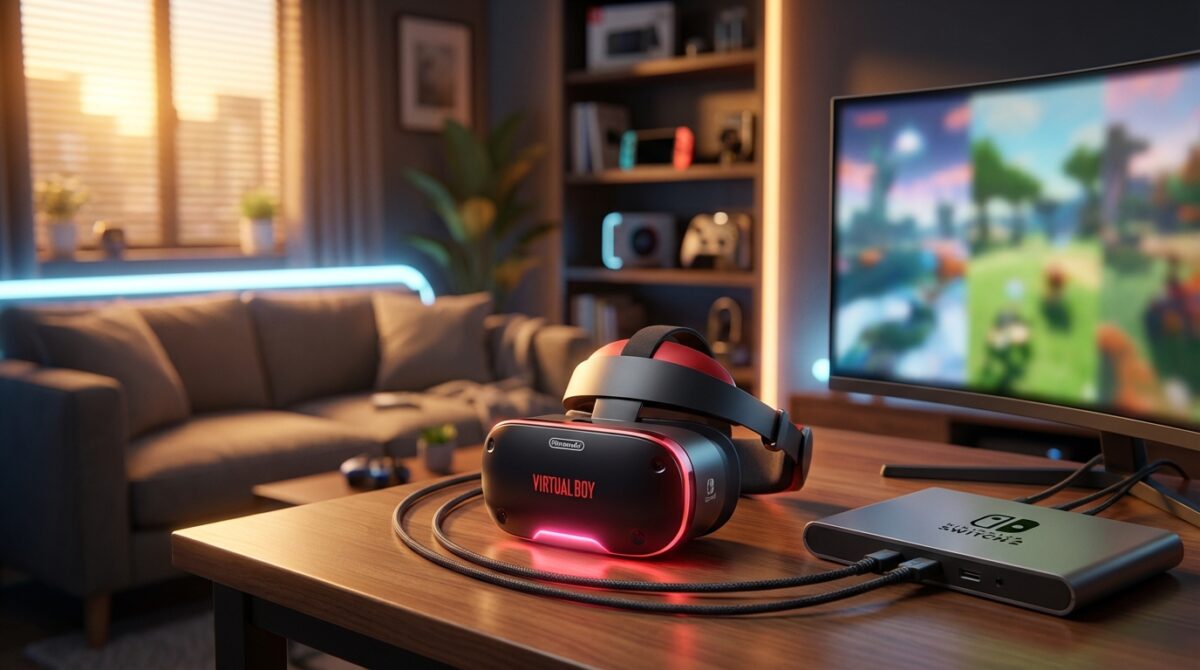
The new Nintendo Virtual Boy accessory is not a simple nostalgia piece; it is a fully functional VR viewer designed to bridge three decades of hardware experiments. Nintendo offers two distinct versions, each aimed at a different type of player and use case. This dual strategy matters because it decides how you will actually experience Virtual Reality on Switch and Switch 2.
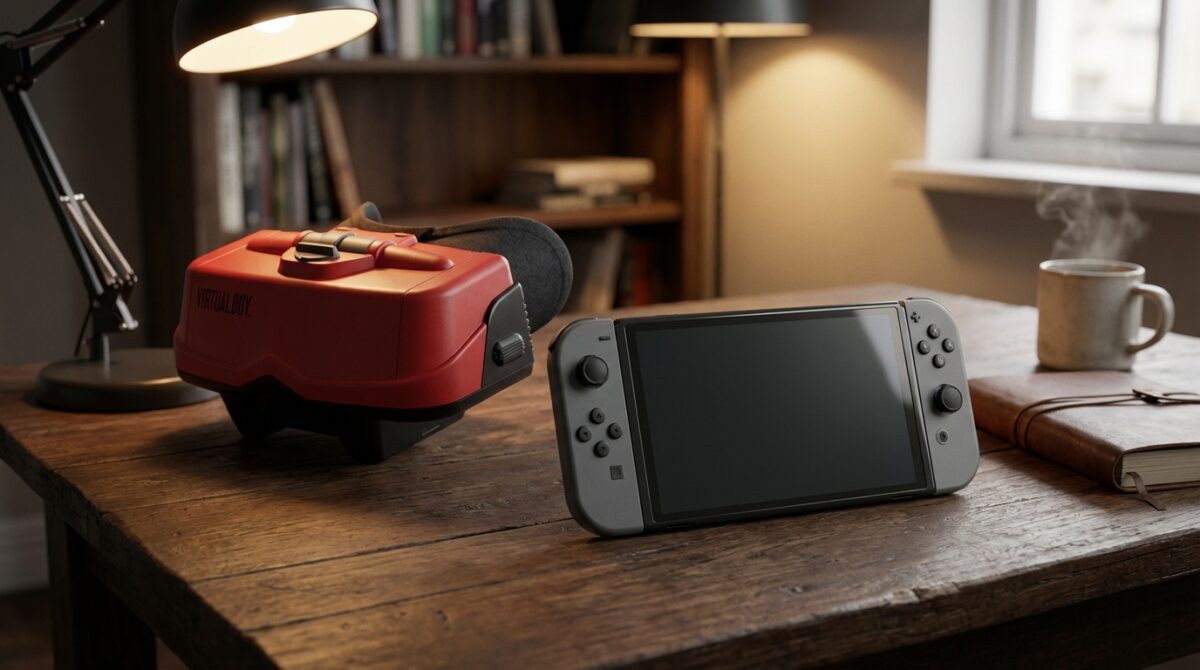
The first version is a solid hardware unit that closely echoes the original 1995 Virtual Boy. It rests on a stand, remains mostly static on a table or desk, and encourages you to lean in rather than move around. The second option follows the lineage of Labo: a cardboard headset into which you slide the console. That cheaper model turns your Switch into a face-mounted viewer you can tilt and move, which is far more suitable for light head motion in VR-supported Switch games.
Could the Google Pixel 10 Pro Boast the Ultimate Gaming Display?
The Amazingly Kodak Charmera: Stealing Hearts Despite Its Quirky Snapshots
Hardware versus cardboard: choosing how you enter VR
The hardware Virtual Boy accessory costs around $100 and includes red-tinted filters over the lenses to echo the monochrome red visuals of the 1995 console. Those filters can be removed when you play standard Switch VR content, which displays in full color. The rigid stand makes long sessions more stable yet reduces the sense of active movement that many players now associate with Virtual Reality. For pure retro gaming, however, this fixed design is closer to what the original developers expected.
The cardboard headset, priced near $25, draws clear inspiration from the earlier Labo VR kit but has been refined for modern Switch and Switch 2 hardware. You hold it up or strap it to your head, letting you gently turn, tilt, or lean during play. For the majority of VR-supported Switch titles, early testers report that this cardboard model feels more natural. The trade-off lies in durability and prestige: the physical headset looks like a dedicated device, while the cardboard version feels more experimental but also more playful.
How Switch 2 unlocks hidden VR modes in Mario and Zelda
The headline feature that has excited the Gaming community is simple: the Virtual Boy accessory officially supports VR modes in existing Switch games. Reports from outlets such as Video Games Chronicle confirm that four titles are compatible at launch. These modes are not remasters or new builds; they reuse the VR implementations previously created for the Labo VR kit.
The supported lineup currently includes Super Mario Odyssey, Super Smash Bros Ultimate, The Legend of Zelda: Breath of the Wild and Captain Toad: Treasure Tracker. Each of these games originally received small VR updates on the first Switch, which many players ignored due to the limited reach of Labo. With Switch 2, those features gain a second life, now backed by a purpose-built viewer and better performance. According to Nintendo, the Switch 2 upgrade for Breath of the Wild still retains its VR support, providing continuity across generations.
What VR actually changes in these four games
VR in these titles does not convert the entire adventure into room-scale Virtual Reality. Instead, Nintendo experiments with focused segments and alternative perspectives. Super Mario Odyssey offers specific VR-compatible levels and bonus viewpoints, almost like interactive dioramas that let you look around while Mario jumps and spins across the stage. Captain Toad uses a similar approach, turning puzzle-box levels into miniature worlds you can inspect from new angles.
Breath of the Wild and Super Smash Bros Ultimate take slightly different paths. Zelda lets you experience exploration and combat with a more immersive sense of scale, although the mode remains better suited to short sessions. Smash Bros taps VR for special modes and spectator-style experiences, enabling you to observe battles from closer perspectives. Articles from sources such as IGN and other specialist sites indicate that the Virtual Boy accessory faithfully reproduces these features on both Switch and Switch 2.
Why this Virtual Boy revival matters for Nintendo history
To understand the appeal of the new accessory, you have to revisit 1995, when Nintendo launched the original Virtual Boy. That machine was one of the first mass-market VR attempts, released long before consumer headsets such as Oculus Rift or PlayStation VR. Players peered into a fixed visor sitting on a stand, seeing nothing but red-on-black graphics without head tracking or motion controllers. The system sold poorly and only received around 14 games in North America before production stopped.
Despite its commercial failure, the Virtual Boy carved out a curious niche in Gaming culture. Collectors valued its bold design and strange library of titles, while historians pointed to its early exploration of stereoscopic depth and Virtual Reality concepts. By bringing the brand back through an accessory for the hugely successful Switch family, Nintendo reframes that history. The company is not pretending the missteps never happened; instead, it is leaning into them by offering a headset that is, as some reviewers quip, “just as eccentric and ungainly” but now connected to a thriving platform.
From failed console to software bridge on Switch 2
The new Virtual Boy accessory also serves a structural purpose within Nintendo’s ecosystem. Alongside the hardware launch, several original Virtual Boy games are arriving on Nintendo Switch Online + Expansion Pack. Those titles are tailored for a static visor and work best with the sturdier hardware headset rather than the cardboard viewer. By tying both strands together, Nintendo creates a single physical object that talks to two eras: retro VR from 1995 and hybrid console VR from the Switch age.
Players who missed the first Virtual Boy can now approach its catalogue without hunting down fragile second-hand hardware. At the same time, long-time fans receive a sanctioned way to revisit those red-tinted worlds in a modern context. This dual role explains why the company invested in a $100 physical unit rather than relying solely on cardboard. The accessory becomes a cultural bridge, not just a novelty for a handful of Mario and Zelda experiments.
Cardboard or hardware: deciding how you play in Virtual Reality
For someone like Alex, a fictional Switch 2 owner who primarily plays handheld, the choice between the two versions will reshape daily Gaming habits. Alex might pick the cardboard headset to dip into VR for ten or fifteen minutes between tasks, then quickly slide the console out and return to traditional play. The light frame makes those transitions efficient, which suits portable-focused players and families sharing a single system.
By contrast, a collector or Virtual Boy enthusiast might gravitate toward the sturdier hardware unit. That user likely keeps the headset on a dedicated shelf, near a comfortable chair, ready for focused sessions with the Virtual Boy catalogue on Nintendo Switch Online. The red filters, while removable, offer a nostalgic callback that some fans consider part of the core experience. The fixed stand also reduces the need to hold the device, easing strain during longer retro sessions.
Key factors to consider before purchasing
Several practical criteria can help you decide between both devices. Price is obvious, yet comfort, type of content, and household configuration often matter more in the long term. The cardboard model encourages short, playful dips into Virtual Reality, whereas the stand-based headset invites more deliberate, seated sessions.
Before committing, ask yourself how you plan to use VR on Switch and Switch 2 over the next year. Are you curious about occasional Mario and Zelda VR experiments, or do you intend to explore the full Virtual Boy library as part of a broader retro journey? The answer to that question usually points clearly to the right accessory and avoids buyer’s remorse after the first week of experimentation.
- Players seeking quick, flexible VR sessions with modern titles often prefer the cardboard viewer.
- Fans focused on Virtual Boy classics and longer seated play generally choose the hardware headset.
- Families sharing one console benefit from the lower entry cost of the cardboard option.
- Collectors and enthusiasts may appreciate the physical presence and nostalgia of the premium unit.
- Both accessories launch the same day as Virtual Boy games join Nintendo Switch Online + Expansion Pack.
Launch timing, availability and long-term VR potential on Switch
Nintendo scheduled both Virtual Boy accessories to launch on February 17, aligning with the arrival of several Virtual Boy titles on its subscription service. This date acts as a coordinated event for fans of retro Gaming and Virtual Reality experimentation. Players can order the headset—either hardware or cardboard—through the online My Nintendo Store, as confirmed by official announcements and reports from sites such as Nintendo’s news hub.
The timing also addresses a compatibility gap. Labo projects have not carried over neatly to Switch 2, leaving earlier VR efforts stranded on the original console. By reintroducing those modes through the Virtual Boy accessory, Nintendo protects previous software work while strengthening the appeal of its new hardware generation. Switch 2 owners receive immediate value from older titles, rather than waiting for future VR-specific releases.
What this means for the future of VR on Nintendo platforms
The Virtual Boy accessory does not signal a full-scale pivot into high-end Virtual Reality, yet it sends a clear message about Nintendo’s willingness to experiment. Instead of large budgets poured into a single VR flagship, the company prefers small, creative modes inside familiar franchises such as Mario and Zelda. This lower-risk approach suits a platform that must also function as a conventional hybrid console for millions of players.
For developers, the accessory provides a shared baseline: a known field of view, a consistent optical design, and a user base spanning both Switch and Switch 2. That stability could encourage more studios to add discrete VR features, hidden challenges, or spectator modes to their projects. Over time, players like Alex may find that their favourite games quietly include optional VR slices, turning the Virtual Boy accessory from curiosity into a standard side door into new ways of seeing the same worlds.
Which games support the Virtual Boy accessory on Switch and Switch 2?
At launch, the accessory supports VR modes in four existing Switch titles: Super Mario Odyssey, Super Smash Bros Ultimate, The Legend of Zelda: Breath of the Wild and Captain Toad: Treasure Tracker. These modes reuse the implementations originally created for the Labo VR kit, now accessible on both Switch and Switch 2 through the new headset.
What is the difference between the cardboard and hardware Virtual Boy versions?
The cardboard version is a lightweight, handheld viewer similar to Labo, priced around $25 and suited for short, flexible VR sessions. The hardware version costs about $100, includes removable red filters, rests on a stand like the 1995 Virtual Boy, and is better suited for seated play and original Virtual Boy titles on Nintendo Switch Online.
Can I use my old Labo VR headset to play Virtual Boy games?
Virtual Boy titles made available through Nintendo Switch Online are designed around the new accessory rather than the earlier Labo VR kit. Current information indicates that original Labo headsets do not support those Virtual Boy games, so you will need one of the new accessories to experience that catalogue as intended.
Is the Virtual Boy accessory comfortable for long gaming sessions?
Top Wireless Earbuds to Elevate Your Audio Experience in 2026
Upcoming iPhone 17e Set to Debut Soon Featuring MagSafe and the Powerful A19 Chip
Comfort depends on the version and the type of game. The stand-based hardware unit generally feels more stable for longer seated sessions, particularly with Virtual Boy classics. The cardboard viewer works well for shorter bursts with modern Switch VR modes but can become tiring if held for extended periods. Short, regular breaks remain advisable.
Where can I buy the new Virtual Boy accessory?
Both the cardboard and hardware Virtual Boy accessories are sold through the My Nintendo Store in supported regions. Availability may vary by country and stock levels. The launch coincides with Virtual Boy titles joining Nintendo Switch Online + Expansion Pack, so checking regional Nintendo storefronts around that date is recommended.