

Show summary Hide summary
- Apple’s foldable iPhone roadmap and the clamshell pivot
- Why a clamshell design fits Apple’s product philosophy
- Competition pressure and lessons from Samsung and Motorola
- From big-book prototypes to a compact second foldable
- User experience, crease concerns, and ecosystem integration
- What this second foldable could mean for future Apple devices
The most intriguing part of Apple’s foldable roadmap is no longer the first device, but the one that might come next: a compact clamshell iPhone that could reshape how you think about a pocketable premium smartphone.
Apple’s foldable iPhone roadmap and the clamshell pivot
Industry watchers have spent years debating when Apple would finally ship a foldable iPhone, but the conversation has quietly shifted to what happens after that first launch. According to reporting from Mark Gurman at Bloomberg and other analysts, Apple is already exploring a second model described as a square, clamshell-style foldable phone. The project is still considered experimental and is not guaranteed for release, yet its existence says a lot about how Apple reads long-term mobile technology trends and user behavior.
In this scenario, Apple starts with a larger foldable iPhone, closer to a small tablet when open, then follows with a more compact “flip” device. That two-step strategy mirrors what has happened in the Android ecosystem, where Samsung’s Galaxy Z Fold line appeared before the Galaxy Z Flip family matured into a mainstream fashion and lifestyle product. Analysts following sources such as MacRumors’ foldable iPhone guide suggest Apple wants to enter this space only once it is confident about hinge durability, crease visibility, and long-term display reliability. A second, smaller model under active consideration signals that Apple expects the first foldable to be successful enough to deserve a full product line rather than a one-off experiment.
Apple’s iPhone 20 in 2027: A Revolutionary All-Glass Design with No Buttons
Xiaomi 17 Ultra Launches at a Steep €1,499 with Battery Life Reduced by 15%?
Why a clamshell design fits Apple’s product philosophy
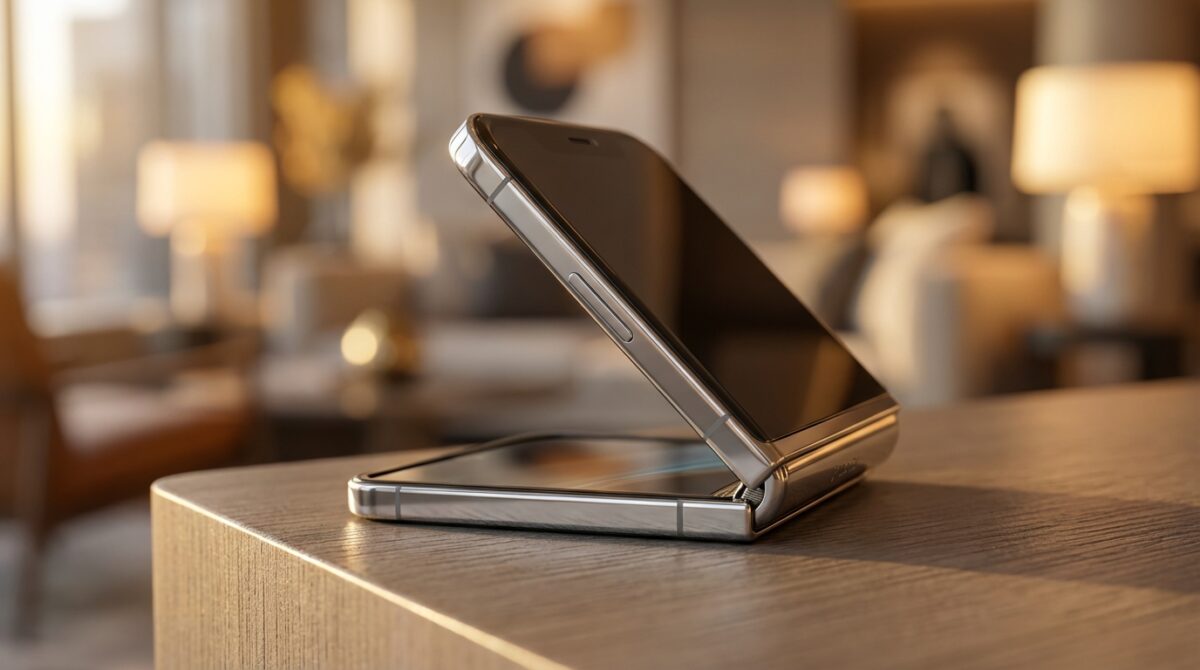
The clamshell design under review reportedly uses a more square footprint when closed, echoing the familiar feel of classic flip phones but executed with a modern foldable screen and premium materials. For Apple, that format aligns neatly with an emphasis on one-handed use, pocketability, and minimalism in product design. A closed clamshell foldable iPhone could slip more easily into small pockets or bags, yet still unfold into a full-size display similar to today’s standard iPhone. That contrast between compact form and full-screen utility is exactly the kind of device innovation Apple tends to favor.
Think of a user like Maya, a product manager who already carries a laptop, tablet, and noise-cancelling headphones. She does not necessarily want a foldable that turns into a mini-tablet, because she already owns an iPad. A flip-style foldable, however, gives her a normal iPhone-sized experience when open and a very compact footprint when closed, cutting bulk without forcing compromises on app layouts. Reports summarized on sources such as CNET’s overview of the iPhone Fold rumors indicate that Apple is testing different screen sizes for exactly this reason: it wants the device to feel familiar when opened, rather than like a separate category that demands new usage habits.
Competition pressure and lessons from Samsung and Motorola
By the time Apple ships a foldable iPhone, Samsung will already be on its seventh Galaxy Z Flip generation and Huawei and Motorola will have accumulated several product cycles of experience. Samsung has turned the clamshell format into a mass-market proposition, pitching it as a stylish lifestyle device that also happens to fold. Motorola’s Razr revival follows a similar playbook, leaning heavily on nostalgia while experimenting with software tricks on the outer display. Apple enters this environment as a latecomer, yet history shows that being late does not prevent strong adoption when execution is meticulous and the ecosystem is coherent.
The Apple Watch is often cited as a precedent. When Apple joined the smartwatch market, Android Wear devices had already appeared, but none offered the same tight integration with phones, curated app selection, and health tracking narrative. Analysts expect a similar pattern with foldables: competitors test the waters and normalize the concept, then Apple arrives with refined hardware, deep iOS integration, and services tuned for dual-orientation use. The rumored clamshell model would then sharpen Apple’s competitive stance against the Galaxy Z Flip by focusing on durability, camera performance, and subtle interface refinements instead of chasing extreme specs or flashy features for their own sake.
From big-book prototypes to a compact second foldable
Reports from Gurman and earlier investigations by The Information describe an internal journey that started with much larger foldable concepts. At one stage, Apple engineers reportedly considered a device closer in size to an iPad mini that would open like a book, merging tablet and phone roles in a single product. That concept promised dramatic screen real estate, yet it also raised difficult engineering questions about hinge strength, panel yield, and software adaptation for larger foldable screens. As development advanced, those challenges appear to have pushed the larger design further into the future, with some analysts mentioning dates closer to 2029 for anything iPad-sized.
In parallel, Apple’s hardware and design teams are said to have built several clamshell prototypes, some with small outer displays and others leaning on a more expansive external panel similar to the latest Android flips. The smaller foldable now “under consideration” seems to be part of a broader portfolio strategy rather than an isolated experiment. According to rumor roundups such as AppleScoop’s summary of the latest foldable iPhone rumors, Apple’s internal projections once floated first-year shipments in the high single-digit millions. Even if those numbers are revised down, the existence of volume estimates indicates that Apple views foldables as a serious next step in consumer electronics, not a niche curiosity.
User experience, crease concerns, and ecosystem integration
The biggest question for potential buyers is not only when the foldable iPhone will arrive, but how it will feel in daily use. Existing foldable phones have made real progress, yet users still notice the crease in the middle of the display, worry about long-term durability, and sometimes encounter software that treats the fold as an afterthought. Apple’s perfectionist approach, documented by outlets such as Wccftech that describe the company’s insistence on solving hinge and crease issues before launch, suggests that the first and second foldables must meet a higher bar before they are allowed to ship.
For the clamshell model, ergonomics and interface continuity become central. A smaller folded footprint could encourage quick-glance interactions on an outer display, with full tasks reserved for the unfolded main panel. Apple already has the building blocks in iOS: Live Activities, interactive widgets, and continuity features between Apple Watch, iPhone, and Mac. A flip-style foldable could extend these ideas so that users glance at notifications or respond to messages while the phone is half-open on a table. If the software treats each posture as a natural state, the device stops feeling like a novelty and becomes a flexible extension of the broader Apple ecosystem.
What this second foldable could mean for future Apple devices
If Apple moves forward with a clamshell foldable iPhone as its second entry, the decision will influence hardware plans far beyond one product line. Design learnings from a compact flip phone could inform future AirPods charging cases, accessory mounts, or even experimental Mac concepts that explore folding displays. More immediately, suppliers that invest in improved ultra-thin glass, hinge mechanisms, and low-power outer screens for the foldable iPhone will be better positioned to support other categories where bendable or flexible components matter.
For users, a successful clamshell model would broaden the decision tree. Instead of choosing only between “standard iPhone” and “large foldable,” you might weigh three options: classic slab, book-style fold, or compact flip. Each format speaks to different habits. People who mainly read and multitask may favor the book-like device, while those who value portability and a distinctive silhouette may gravitate to the clamshell design. Once Apple establishes all three, the company can fine-tune camera priorities, processor tiers, and pricing structures for each, just as it currently differentiates between the iPhone, iPhone Pro, and Pro Max lines.
- Standard iPhone for users who prefer simplicity and proven durability.
- Book-style foldable iPhone for multitaskers who want tablet-like space.
- Clamshell foldable iPhone for those prioritizing portability and design.
- Accessory ecosystem evolving around new hinges, cases, and stands.
- Developers adapting apps to new postures and dual-orientation layouts.
When could Apple release its first foldable iPhone?
Analysts tracking supply chain data and patent activity suggest that Apple is targeting a launch window within the next product cycle or two, once hinge reliability and screen crease visibility meet internal quality standards. The exact date remains unconfirmed and may shift as testing continues.
Is the clamshell foldable iPhone already confirmed?
The clamshell-style foldable is described by sources such as Bloomberg’s Mark Gurman as being under active exploration, but Apple has not committed to releasing it. The device is reportedly in the concept and prototype stage, which means plans could change based on engineering results and market response to the first foldable.
How would a clamshell iPhone differ from the larger foldable?
The larger foldable is expected to open like a book and provide more screen space for productivity, similar to a small tablet. The clamshell version would focus on compactness, folding vertically to create a smaller pocketable square, while still offering a full-size smartphone display when open.
Will existing iPhone apps work on a foldable model?
Sony wf-1000xm6 revealed: first images and exciting new features including an innovative array of microphones
Iphone 18 release delayed: apple reveals updated launch timeline beyond late 2026
Most iPhone apps should run without major modification, because Apple typically preserves core screen dimensions and interface conventions. Developers will likely gain new tools to optimize layouts for different folding angles, yet basic compatibility is expected to match what users know from current iOS devices.
Why is Apple taking longer than rivals with foldable phones?
Apple tends to wait until component yields, durability standards, and software experiences align with its long-term support model. Foldable screens introduce risks around hinge wear, panel damage, and crease visibility, so the company appears determined to solve these issues before attaching the iPhone brand to such a device.