
Show summary Hide summary
- Honor V6 design philosophy and first tactile impressions
- The hinge engineering that makes the V6 feel dependable
- The inner and outer displays: where design meets daily behavior
- Performance, battery and AI: the invisible side of sleek design
- Cameras and real-world use: how the V6 fits creative routines
- Who the Honor V6 foldable design really targets
- How thin is the Honor V6 compared with other foldable phones?
- Is the crease on the Honor V6 display very noticeable?
- What kind of water and dust resistance does the V6 offer?
- Which processor powers the Honor V6 and what does it enable?
- Who is the Honor V6 foldable best suited for?
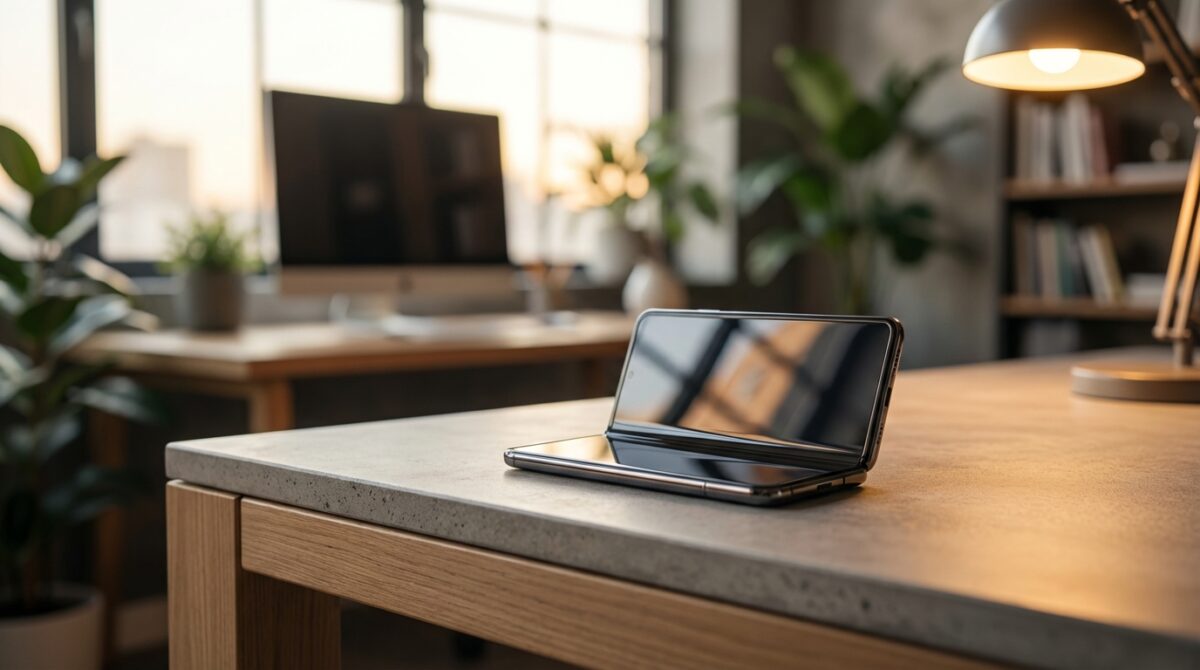
The first time you see Honor’s V6 foldable phone on a table, your brain hesitates: is this really a foldable, or an impossibly slim tablet? That split-second confusion is exactly where its appeal starts, mixing sleek elegance with ambitious engineering in a way tech enthusiasts love to dissect and share.
Forget abstract specs for a moment. The V6 immediately sets itself apart through its shape, weight balance, and the quiet confidence of its design decisions. It is built as a book-style foldable that aims to feel as natural as a regular flagship, while still offering the versatility of a tablet-sized display when opened. Many foldables still look like prototypes disguised as products; the V6 tries to flip that narrative by focusing on understatement rather than spectacle.
Honor V6 design philosophy and first tactile impressions
When you pick up the Honor V6, the first surprise is how little it resembles the chunky foldables of just a few years ago. Closed, the chassis measures only 8.75 mm, which makes it one of the thinnest foldable phone bodies available and just slightly slimmer than the Magic V5. That difference may sound minor on paper, yet in your hand it changes the way your fingers wrap around the device and how naturally it slips into a jacket pocket.
At Last! My Ultimate Camera Phone Is Here: An In-Depth Review of Xiaomi’s Leica Leitzphone
The Most Exciting Galaxy S26 Ultra Feature That Also Sparks a Bit of Paranoia
Unfolded, the body narrows to around 4.1 mm. This thickness is closer to a high-end tablet than to a folding phone, which matters for anyone using the V6 as a reading or productivity device during commutes. A product designer at a London studio, whom we will call Maya, described it after MWC as “the first foldable I could imagine sketching on for an hour without wrist fatigue.” That kind of feedback underlines how Honor is deliberately targeting longer, more comfortable sessions rather than short, experimental usage.

Materials, color options and the feel of sleek elegance
The materials chosen for the V6 emphasize tactility as much as visual sophistication. One of the standout finishes combines deep red vegan leather with subtle gold accents, giving the foldable phone a refined, almost fashion-accessory presence rather than a purely technical object. The vegan leather introduces grip and warmth, addressing a common complaint about glass-backed devices that feel slippery and impersonal during daily use.
Maya, who normally carries a classic slab phone, mentioned that this finish removed a mental barrier she previously had with foldables, which often appeared fragile or overly futuristic. The V6 instead delivers a modern, confident aesthetic that would not look out of place in a design studio or a boardroom. That balance between bold color and understated lines gives the device its particular type of sleek elegance, appealing to users who care about visual identity as much as raw performance.
The hinge engineering that makes the V6 feel dependable
A foldable phone only feels credible if its hinge inspires trust. Honor treats this component as the centerpiece of the V6’s innovation story. The company uses an aerospace-grade steel structure that, according to its own internal comparisons, provides up to 87 percent more strength than the A-pillar of a standard passenger car. This analogy may be marketing-friendly, yet it points to a clear objective: reducing the psychological fear that the device might fail after repeated folding.
During early hands-on sessions, reviewers reported a satisfying resistance when opening and closing the phone. The hinge does not flop; it holds tension in a controlled way so you can stop in intermediate angles for tasks like video calls or desk viewing. That careful tuning influences how premium the phone feels, because a wobbly mechanism immediately undermines any claims of advanced technology or high price positioning.
Water, dust protection and the new expectations for foldables
What really shifts expectations is the V6’s combination of IP68 and IP69 protection ratings. These certifications indicate high resistance not only to dust but also to immersion and high-pressure water jets, which historically have been difficult to achieve in a foldable design. Hinges create moving gaps; sealing those gaps without making the mechanism stiff is a significant engineering puzzle.
For users, this translates into tangible freedom. You can read an ebook on a sandy beach, check navigation during heavy rain, or quickly rinse the phone after a dusty bike ride without panic. A tech consultant who travels frequently between Barcelona and Berlin described the V6 as “the first foldable I would confidently take on a work trip without babying it.” That sense of robustness is becoming a key differentiator as more brands compete in the folding segment.
The inner and outer displays: where design meets daily behavior
The Honor V6 revolves around its 7.95-inch inner display, which acts as a compact tablet when unfolded. The panel appears bright and vivid under direct sunlight, something early testers reported while walking around Barcelona’s outdoor areas at the trade show. Color reproduction seems tuned for media and gaming, yet text remains sharp enough for extended reading or editing sessions on productivity apps.
Honor claims to have refined the crease that runs down the center of the foldable screen. While no foldable can hide this completely, the V6 aims to reduce visual distraction rather than chase an impossible “invisible crease.” Some reviewers noted that, when looking at content straight on, the crease felt less obtrusive than on several rivals. The real test will come from side-by-side comparisons with devices such as the Galaxy Z Fold 7 and Google’s latest Pixel foldable once they share the same lighting conditions.
Outer screen, content flow and lifestyle scenarios
The outer display takes on a critical role in the V6’s design logic. It must be comfortable enough to handle quick interactions, messages, and notifications without opening the device every time. Honor opts for a standard phone-like shape rather than a narrow, remote-control layout. That makes everyday use smoother, especially for users who type frequently or jump between apps.
Consider a typical workflow for someone like Maya. She replies to messages on the outer screen while commuting, then unfolds the phone once she reaches her coworking space to sketch design concepts or review client decks on the larger inner panel. This flow requires solid touch responsiveness, consistent brightness between the two screens, and minimal friction when transitioning from one mode to another. The V6 design encourages exactly that, turning the fold into a natural gesture rather than a special occasion.
Performance, battery and AI: the invisible side of sleek design
Underneath the polished exterior, the Honor V6 runs on Qualcomm’s Snapdragon 8 Elite Gen 5 platform. This chipset belongs to the same performance league as the processors inside peers like the OnePlus 15 and Xiaomi’s Leica-branded flagships. For users, that means heavy multitasking, gaming, and creative workloads should run smoothly, which is especially important on a foldable where two or three apps may be visible at once.
The phone houses a 6,600 mAh silicon-carbon battery, a technology that aims to extend capacity without adding bulk. This choice helps explain how the V6 maintains such a slim profile while still targeting a full day of mixed use. Honor positions the device as capable of lasting through intensive business days that blend video calls, document editing, and media consumption. Actual endurance will depend on refresh rates and AI features, yet the raw capacity provides a solid foundation.
Android 16, AI tools and cross-device workflows
The software story shapes how this foldable phone fits into a modern tech ecosystem. The V6 ships with Android 16 at its core, combining Google’s newest features with Honor’s own interface. Users gain access to Gemini Live, Circle to Search, and other generative AI options that can summarize documents, assist with creative tasks, or accelerate routine actions. These tools feel especially natural on the large inner display, where split-screen modes provide space for both content and assistant windows.
One intriguing decision is deeper integration with Apple MacBooks, offering features such as using the V6 as a second display and dragging files between the phone and a laptop. A freelance video editor might keep reference notes on the V6’s inner screen while the main timeline runs on a MacBook, then quickly transfer clips or drafts. This type of interoperability blurs platform boundaries and positions the V6 as a flexible companion in mixed-device setups, not just a stand-alone gadget.
Cameras and real-world use: how the V6 fits creative routines
Honor equips the V6 with a triple camera array that includes a 50-megapixel main sensor, a 64-megapixel telephoto module, and a 50-megapixel ultrawide. The combination aims to cover most daily shooting scenarios, from street photography to event coverage. Foldable phones sometimes compromise camera hardware to save space; Honor instead chooses a configuration that resembles upper-tier slab phones, supported by computational photography algorithms.
Think of a content creator filming a short product demo. They can prop the V6 semi-folded on a desk, use the main camera as a stable recording setup, and monitor framing on the upper part of the inner screen. The telephoto helps capture details, while the ultrawide handles room shots or group scenes. AI-driven enhancements, built on the Snapdragon platform and Android’s latest frameworks, support low-light optimization and subject detection, although long-term testing will reveal how well these features hold against established camera champions.
Who the Honor V6 foldable design really targets
The pricing has not yet been confirmed, but expectations suggest a level near the Magic V5, which launched in the UK around £1,699. That places the V6 firmly in the premium category, competing with high-end foldables and ultra-flagship slab phones. Customers considering such a purchase are not only chasing raw specs; they are also evaluating design, longevity, and how the device fits their lifestyle or professional brand.
The V6 seems directed at users who live at the intersection of creativity and mobility: designers, consultants, founders, and early adopters who move frequently between meetings, travel, and hybrid work spaces. These people tend to follow events like MWC closely and may already read coverage such as analyses of anticipated tech innovations from Barcelona. For them, the Honor V6 offers a mix of sleek elegance, compact power, and credible durability that transforms a foldable from a curiosity into a daily instrument.
- Ultra-slim 8.75 mm profile when closed for pocketable comfort.
- Sturdy aerospace-steel hinge designed for long-term folding reliability.
- IP68 and IP69 protection to withstand dust, rain, and pressurized water.
- Large 7.95-inch inner display optimized for reading, gaming, and multitasking.
- 6,600 mAh silicon-carbon battery supporting a full day of intensive use.
For readers tracking broader trends, the V6 also reflects how foldables are maturing from experiments into polished tools. Reports from events like MWC highlight how brands are converging on slimmer bodies, better hinges, and richer AI features, as discussed in various industry roundups including coverage of MWC’s evolving smartphone landscape. Honor’s latest device fits squarely inside that shift, showing how design and engineering continue to compress tablet-like capability into a form factor that still looks and feels like a phone.
How thin is the Honor V6 compared with other foldable phones?
The Honor V6 measures about 8.75 mm when closed and around 4.1 mm when unfolded, placing it among the slimmest book-style foldables currently announced. This profile makes it feel closer to a regular flagship phone in the hand, rather than a bulky experimental device.
Is the crease on the Honor V6 display very noticeable?
Honor has refined the hinge and inner panel to reduce the visibility of the crease. During early hands-on use, the crease was visible at certain angles but less distracting when viewing content straight on. A definitive judgment will require side-by-side comparisons with rival foldables under identical lighting.
What kind of water and dust resistance does the V6 offer?
The V6 carries both IP68 and IP69 ratings, meaning it is protected against dust ingress, immersion in water, and even high-pressure water jets. This level of resilience is unusual for foldable phones and makes the device more suitable for outdoor use, travel, and unpredictable weather conditions.
Which processor powers the Honor V6 and what does it enable?
Capturing Luxury Cars Becomes Effortless with the Galaxy S26’s Innovative Camera Feature
Xiaomi 17: A Compact Smartphone Packing a Surprisingly Powerful Battery
The phone uses Qualcomm’s Snapdragon 8 Elite Gen 5 platform. This high-end chipset supports demanding multitasking, gaming, and creative workloads, as well as advanced AI features such as live assistants, content summarization, and enhanced camera processing without sacrificing responsiveness.
Who is the Honor V6 foldable best suited for?
The V6 primarily targets users who value both design and productivity: creative professionals, consultants, entrepreneurs, and tech enthusiasts who benefit from a tablet-like display in a phone-sized body. Its sleek elegance, strong hinge, and software integrations make it particularly appealing for mobile work and mixed-device workflows.