
Show summary Hide summary
- Honor Robot Phone launch timeline and ecosystem strategy
- Inside the Honor Robot Phone design and 200MP gimbal arm
- AI behaviors, tracking modes and embodied interaction
- Use cases: From solo creators to everyday mobile users
- Honor’s broader robotics vision and market impact
- Key questions before the Robot Phone reaches consumers
- Practical checklist before considering the Robot Phone
- When is the Honor Robot Phone expected to launch?
- What makes the Robot Phone different from a regular smartphone?
- Will the Honor Robot Phone be available outside China?
- How does the robotic camera improve everyday use?
- Are there concerns about durability and battery life?
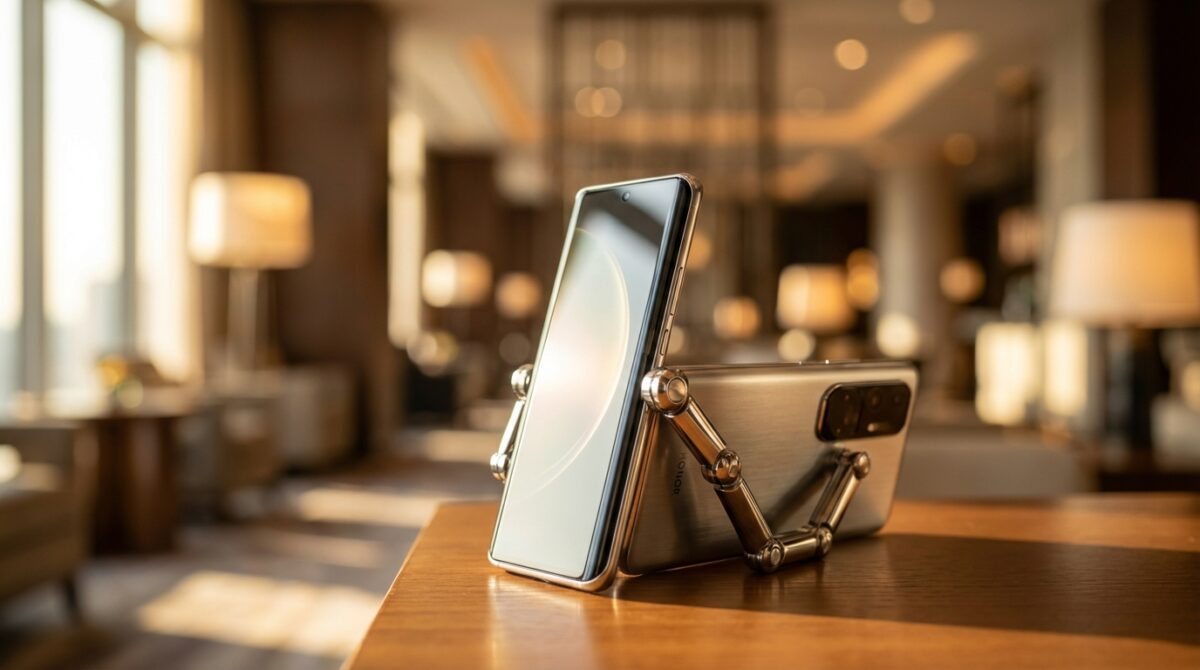
A smartphone that unfolds a robotic arm, follows you around the room, and nods when you speak stops being just a phone. Honor’s upcoming Robot Phone takes that leap, turning the camera into a moving, expressive device and pushing mobile AI far beyond filters and selfies.
Honor’s announcement that this innovative robot phone will launch later this year marks a bold step for mobile technology. The company is not simply chasing another spec race; it is testing how embodied intelligence fits in your pocket. For anyone who cares about smartphone innovation, this launch hints at what could replace the static slab design that has dominated for over a decade.
Honor Robot Phone launch timeline and ecosystem strategy
Honor used Mobile World Congress as a global stage to shift the conversation from foldables and camera bumps to robotics. During its “AI Device Ecosystem Era” keynote, the company confirmed that the Robot Phone is targeted for release in the second half of the year, with the first wave limited to the Chinese market. This regional focus allows Honor to test user behavior, refine software, and manage production risk before considering wider availability.
Google and OpenAI Staff Unite in Open Letter Showing Solidarity with Anthropic
Commemorate 30 Years of Pokémon with a Retro Game Boy-Inspired Music Player
The launch sits alongside the debut of the Magic V6 foldable and a compact humanoid robot, signaling that Honor sees the future of mobile not as isolated devices but as an ecosystem of AI-driven companions. Reports from events and previews, such as coverage on Honor’s Robot Phone launch alongside the Magic V6, highlight how the brand frames this device as a “new species” of smartphone. Instead of just another flagship, the Robot Phone becomes a reference product that connects phones, wearables, and home robotics through shared AI services.
Inside the Honor Robot Phone design and 200MP gimbal arm
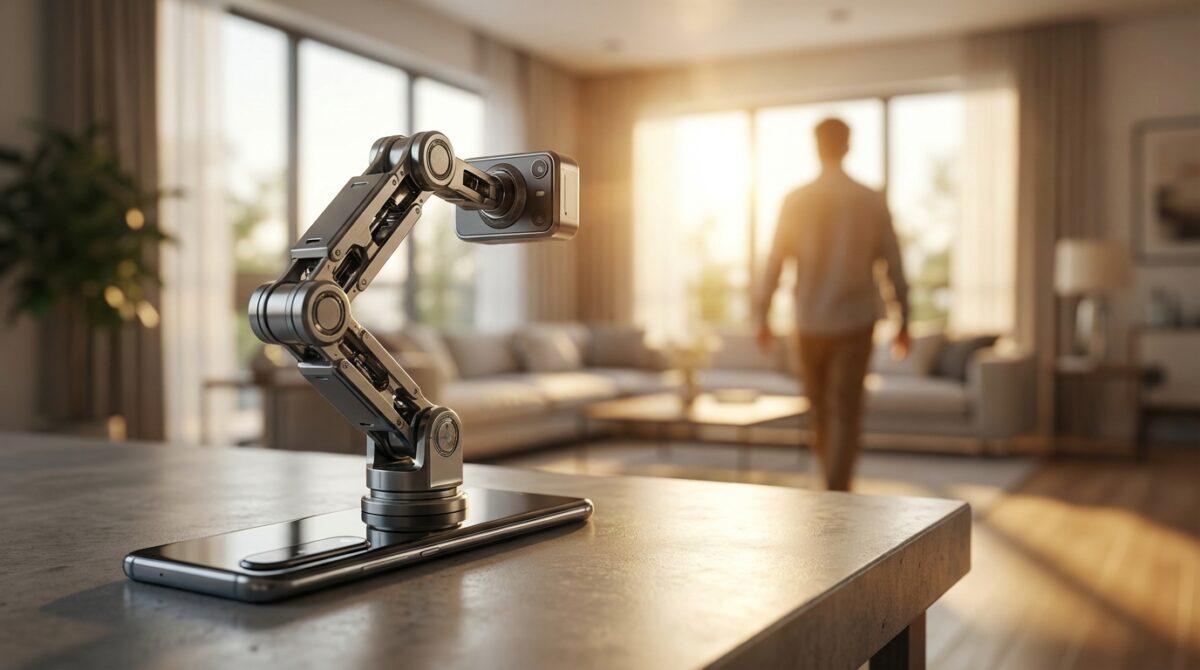
At first glance, the Robot Phone looks like an advanced slab smartphone, but the rear hides a compact robotic system. A 200‑megapixel main sensor sits on a tiny four‑degrees‑of‑freedom gimbal arm that folds into the chassis when not in use. Honor describes this as the smallest 4DoF gimbal module in the industry, which matters because any extra millimeter affects weight, battery, and structural rigidity. Instead of relying only on digital stabilization, the camera physically moves to keep subjects framed and footage steady.
Journalists who crowded the demo area describe the arm smoothly emerging from the back panel, rotating, tilting, and returning inside without visible jitter. One report on MWC hands-on impressions mentions how the prototype unfolded, held an AI‑assisted conversation, then retracted like a mechanical eyelid closing. The hardware is not only about better video; its movement and expression become part of how you interact with the phone. When the device nods, shakes its “head,” or swivels to follow you, it creates the feeling of a small companion rather than an inert rectangle.
AI behaviors, tracking modes and embodied interaction
The most intriguing aspect of the Robot Phone is how AI animates the hardware. The camera arm can automatically track a subject during video calls or recordings, rotating to keep a face at the center of the frame. Different modes let the phone follow a presenter walking across a room, lock onto a pet, or maintain a stable horizon for handheld shooting. This kind of tracking previously required external gimbals or tripod systems; now it emerges directly from the phone’s body.
Honor also demonstrated more playful behaviors. During stage demos, the device used a chat interface with animated eyes and synchronized arm movements, nodding in agreement or tilting quizzically while responding with AI‑generated speech. In another scene, the phone “danced” in time with music, coordinating its arm motions with beats. These features may sound like novelties, yet they serve a deeper purpose: they test whether expressive movement can make AI interactions feel less abstract and more like a tangible presence in your hand.
Use cases: From solo creators to everyday mobile users
For solo video creators, the Robot Phone hints at a different workflow. Imagine a fitness instructor like the fictional trainer Maya, who currently props her phone on a chair and constantly reframes shots between sets. With the robotic arm, Maya could place the phone at one spot, enable tracking, and move freely through her routine while the camera follows. The 200MP sensor would allow heavy cropping for different aspect ratios without sacrificing detail, reducing the need for multiple takes or external gear.
Everyday users gain subtler benefits that might encourage adoption beyond enthusiasts. Parents filming birthday parties could let the phone sit on a table while the camera automatically tracks the child blowing out candles. Remote workers using video calls might experience more natural framing as they stand up, move to a whiteboard, or walk across a home office. Over time, such convenience can change expectations: instead of adjusting yourself to fit the smartphone, the device adjusts itself to follow you.
Honor’s broader robotics vision and market impact
The Robot Phone did not appear alone on stage; it shared the spotlight with a small humanoid robot that waved, danced, and even attempted backflips. Observers noted that the robot sometimes responded slowly or inconsistently when greeting journalists, suggesting at least some level of onboard autonomy rather than pure remote control. Honor has hinted at commercial ambitions for this machine, yet details about partners or internal development remain undisclosed. Together, the humanoid and the robot phone form a narrative about embodied AI moving from labs to consumer devices.
Industry coverage from sources such as MWC round‑up reports places Honor among a small group of brands willing to experiment with unconventional form factors. For competing manufacturers, the message is clear: camera megapixels and chipset speeds are no longer enough to differentiate high‑end phones. The next contest may revolve around how intelligently hardware can move, sense its surroundings, and collaborate with other devices in a household. Whether the Robot Phone becomes a niche collectible or a template for future designs, it already pushes the debate about what a smartphone is supposed to do.
Key questions before the Robot Phone reaches consumers
Even with the excitement around this launch, several practical questions remain. Durability is one concern: a moving gimbal arm introduces mechanical complexity, which must survive drops, dust, and repeated deployment. Battery life is another factor, as motors and continuous AI tracking draw power that standard camera modules do not. Honor has yet to publish detailed specifications, so analysts are watching for clues in early benchmarks and teardown reports once the device ships.
Software support and long‑term utility will also determine whether buyers treat this as a long‑term device or a short‑lived curiosity. If third‑party developers integrate the robotic arm into creative apps, telepresence tools, or accessibility features, the phone could mature into a platform for embodied mobile AI. Resources like Honor’s own previews of the Robot Phone concept suggest that the company sees this as the foundation of a broader AI and robotics roadmap, not just a one‑off concept.
Practical checklist before considering the Robot Phone
Anyone curious about adopting this device when it becomes available can start by evaluating their own needs and habits. The following checklist helps frame whether a robotic camera phone fits into your daily life or content workflow, rather than standing as an expensive novelty on your desk.
- Assess how often you shoot video alone and struggle with framing or stability.
- Consider if AI‑based subject tracking and motion could replace tripods or gimbals you already own.
- Think about privacy and comfort: are you at ease with a mobile device that physically follows movement in a room.
- Review your upgrade cycle, since first‑generation products may evolve rapidly over one or two years.
- Monitor coverage from reliable technology publications that test durability, battery impact, and software updates.
When is the Honor Robot Phone expected to launch?
Honor has indicated that the Robot Phone is planned for release in the second half of the year, with the initial rollout limited to the Chinese market. Wider availability may follow after the company evaluates real‑world usage, software stability, and production capacity during this first phase.
What makes the Robot Phone different from a regular smartphone?
The Robot Phone integrates a 200‑megapixel camera onto a compact four‑degrees‑of‑freedom gimbal arm that folds into the back of the device. This arm can move autonomously, track subjects, and express simple gestures such as nodding or shaking. Combined with AI interaction modes, it turns the phone into a small robotic companion rather than a static slab.
Will the Honor Robot Phone be available outside China?
Honor has only confirmed a launch in China later this year, so international availability remains unannounced. The company is likely to study feedback from early adopters and refine hardware and software before deciding on other regions. Interested users abroad may need to import the device or wait for an official expansion.
How does the robotic camera improve everyday use?
Set Sail with Pokémon Winds and Waves on Nintendo Switch 2 Releasing in 2027
Google Maps Set to Offer Full Features in South Korea
In practical terms, the moving camera can automatically follow a person during video calls, vlogs, or presentations, keeping them centered without manual adjustments. It can also maintain stability while the user walks or gestures, which reduces blur and jitter. These capabilities aim to simplify solo video production and make casual recordings more dynamic.
Are there concerns about durability and battery life?
Any moving mechanism introduces potential wear, so durability testing will be important once retail units appear. The motors and continuous tracking require additional power, which could affect battery life compared with traditional camera modules. Prospective buyers should follow independent reviews that measure long‑term reliability, charging behavior, and energy consumption in real use.