
Show summary Hide summary
- How Apple’s multi‑day launch signals a bold new strategy
- The products behind the shift: low‑cost MacBook, iPhone 17e and more
- Why a fluid launch calendar could revolutionize consumer experience
- Competitive pressure and the race for launch innovation
- What this bold approach means for Apple’s brand and marketing
- How consumers can navigate the new launch rhythm
- Why is Apple organizing a three-day flurry of announcements instead of one keynote?
- Which products are expected around the March 4 special Apple experience?
- How does this new launch strategy affect my upgrade timing?
- Is Apple’s shift toward flexible launches only about marketing?
- What does this mean for developers and accessory makers?
The next Apple keynote may look familiar on the surface, yet the real drama is happening behind the scenes. A three-day wave of online announcements, a “special Apple experience” across three cities, and a spring lineup packed with Macs, iPads, and a new iPhone 17e all point to something deeper: Apple is quietly rewriting its entire Product Launch playbook.
How Apple’s multi‑day launch signals a bold new strategy
Apple’s invitation to a “special Apple experience” on March 4 sounds understated, but the format tells a different story. Instead of a single polished keynote, the company is preparing a three-day sequence of announcements that build momentum and culminate in in‑person gatherings in New York, London, and Shanghai. This shift reveals how Apple wants to keep attention simmering over several days, rather than peaking for ninety minutes and fading by the weekend.
According to Mark Gurman, at least five products are expected in this wave: a low-cost MacBook, updated MacBook Air and MacBook Pro models, a new entry-level iPad, an iPad Air powered by the M4 chip, and the iPhone 17e as a more affordable smartphone option. Each product targets a different slice of the market, from students to creative professionals. By stretching announcements over multiple days, Apple can give each device a distinct story instead of compressing them into a single overcrowded keynote where only one star truly shines.
Woody and Buzz Team Up Against a Tablet in the Exciting New ‘Toy Story 5’ Trailer
Apple TV’s The Hunt Sets Official Premiere Date at Last

From single keynote spectacle to staged experience
For years, Apple’s Strategy rested on a predictable rhythm: big September iPhone event, spring and early-summer for iPads and Macs, and occasional quiet press releases. That rhythm built Marketing efficiency and a reliable sales heartbeat. Yet it also created enormous pressure to land every major Innovation in one or two tightly scripted moments. A delayed feature or a supply hiccup could throw off an entire year’s narrative.
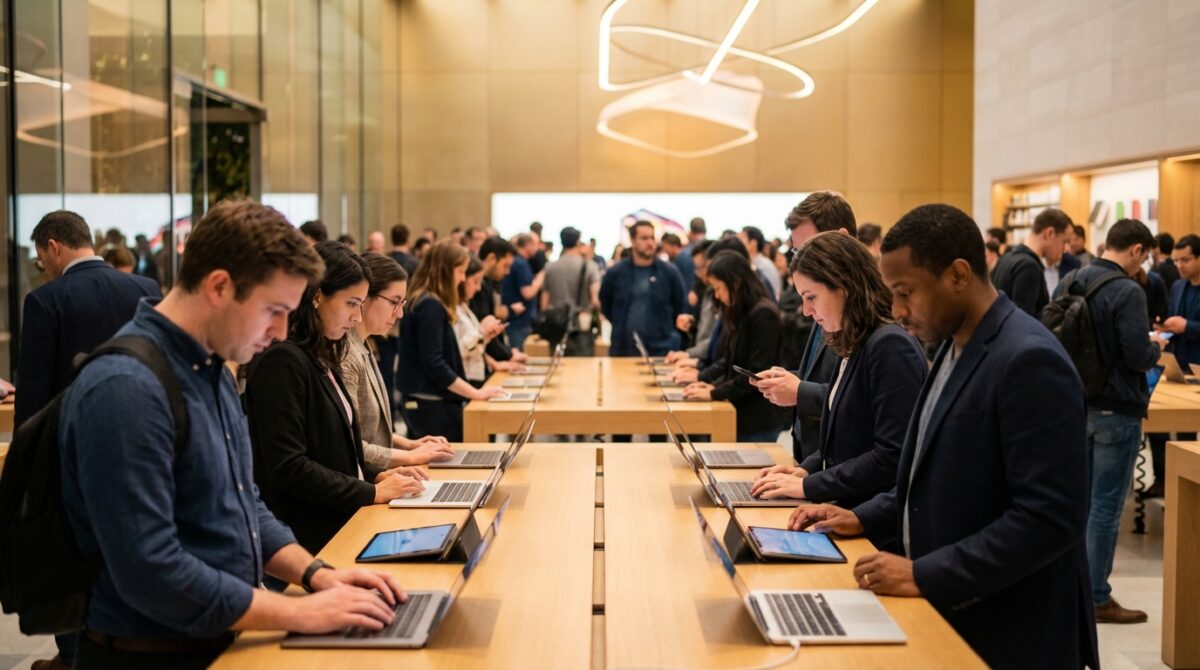
The new staged approach loosens that pressure. Online announcements allow Apple to drop detailed product information quickly, calibrated to social media and newsroom cycles. The in‑person “experience” events then focus on tactile Consumer Experience: journalists spending extended time with hardware, capturing hands‑on impressions and early benchmarks. This blend of digital reach and physical immersion helps Apple maintain its aura of Brand Transformation while adapting to a fragmented attention economy.
The products behind the shift: low‑cost MacBook, iPhone 17e and more
Looking at the rumored devices, you can see how this Bold Approach fits the broader Technology landscape. The low-cost MacBook aims at price-sensitive buyers who previously gravitated to Chromebooks or discounted Windows laptops. It suggests Apple wants a stronger presence in schools and emerging markets, where budgets are strict but expectations for battery life and build quality are high. Pair that with an upgraded MacBook Air and MacBook Pro, and you have a tiered notebook lineup designed to keep users inside the Mac ecosystem at every budget level.
The iPad Air with an M4 chip indicates Apple’s desire to blur the line between tablet and laptop without forcing everyone toward the iPad Pro. Developers, designers, and video editors who do not want the Pro price tag can still benefit from advanced silicon for rendering, coding, and multitasking. A refreshed entry-level iPad complements this by giving families and students a capable device for media, reading, and light productivity. Each device speaks to a different job to be done, which justifies separate announcement moments rather than a single monolithic event.
iPhone 17e and the new iPhone rhythm
The iPhone 17e may be the clearest sign of Apple’s evolving Strategy. Positioned as a more affordable model, it helps Apple answer mid‑range threats from brands like Xiaomi and Samsung’s A‑series. Reports from sources such as coverage of the upcoming iPhone 17e suggest features like MagSafe and a powerful new A‑series chip, which would narrow the gap between “budget” and flagship experiences.
This fits into a broader pattern described by analysts who expect Apple to split iPhone launches into multiple windows, with premium devices in the fall and more accessible variants earlier in the year. Resources such as discussions of split iPhone releases highlight how this structure can keep Apple present in the news cycle longer. Consumers like our fictional buyer Lena, a photographer weighing whether to upgrade now or later, suddenly face more nuanced choices instead of the old “buy in September or wait a year” situation.
Why a fluid launch calendar could revolutionize consumer experience
Behind the multi‑day announcements lies a deeper trend: Apple shows increasing comfort with a fluid Product Launch calendar that responds to product readiness instead of rigid slots. Analysts have described this as a progression toward a “launch when ready” philosophy, a theme explored in depth in reports such as analyses of Apple releasing products as soon as they are ready. This allows Apple to stagger updates across the year, smoothing revenue and giving each device breathing room in the press.
For users, that flexibility can change the Consumer Experience in practical ways. Waiting a full year for meaningful improvements in battery life, camera performance, or connectivity may no longer be necessary. Imagine a scenario where AirPods receive an audio and health-tracking upgrade in late spring, while Apple Watch introduces new safety sensors in autumn. You gain more frequent, targeted upgrades instead of one large, overwhelming wave that complicates your purchasing decisions.
Balancing attention, fatigue, and Innovation
A fluid schedule carries risks. If Apple issues announcements every few weeks, audiences could feel fatigued or confused about what matters. The three-day sequence tied to a single “special experience” suggests a compromise: keep bursts focused, but allow the overall calendar to stay flexible. Each burst becomes a themed narrative rather than random noise. The March sequence clearly emphasizes Macs, iPads, and a more accessible iPhone, rather than sprinkling unrelated gadgets across the quarter.
This structure also influences how developers and accessory makers plan. A more predictable cluster of launches allows them to align their own roadmaps, even if the exact day shifts. That stability supports Innovation around Apple platforms without forcing everyone to bet everything on a single September event. The result is an ecosystem that feels alive throughout the year, with focused peaks instead of a single mountain.
Competitive pressure and the race for launch innovation
Apple is not moving in a vacuum. Android rivals are experimenting with aggressive timelines, foldable devices, and region-specific models. Reports like analyses of Apple’s spring reveals and fall finishes frame the new approach as a defense against plateauing smartphone sales and lengthening upgrade cycles. When users keep devices for four or five years, manufacturers must find new ways to stay part of ongoing conversations.
Competing devices such as the Xiaomi 17 Ultra or upcoming Galaxy S26, already discussed in industry overviews, raise expectations on camera systems, battery technology, and display quality. Camera‑focused buyers might even compare Apple’s portfolio against lists like top cameras to watch this year. In that context, Apple’s multi‑day, multi‑city event becomes more than a spectacle; it is a statement that the company can adapt its Marketing and launch mechanics as aggressively as its silicon design.
Learning from other industries and platforms
The idea of staggered launches is common in gaming consoles, streaming platforms, and software. Nintendo nurtured long-term interest in the Switch with a calendar of periodic direct announcements, while streaming services unveil waves of content just before new quarters. Apple seems to draw from those patterns, but with a hardware‑first twist: the hardware becomes the tentpole, and services such as iCloud, Apple TV+, and Fitness+ subtly ride along.
For a mid‑sized developer like our fictional studio Aurora Apps, this rhythm matters. A spring iPad Air event built around creative power is an ideal moment to launch a new design tool. A fall iPhone Pro showcase tied to camera improvements becomes the right stage for a computational photography app. By aligning their own Product Launch calendars to Apple’s clusters, they benefit from borrowed attention while serving niche audiences.
What this bold approach means for Apple’s brand and marketing
Apple’s Brand Transformation over the last decade has been about more than products; it has been about mastering anticipation. Analysts who examine the “art of building anticipation” in Apple’s history point to consistent secrecy, carefully timed leaks, and theater‑like keynotes. The three‑day announcement strategy modernizes that playbook. Short online drops feed speculation, while the in‑person experience offers the emotional payoff of touching new hardware.
From a Marketing point of view, this layered approach also improves segmentation. Media outlets focused on enterprise workflows can prioritize MacBook and iPad news, while lifestyle and Consumer Experience publications may highlight the accessibility of the iPhone 17e. Social channels can tell smaller product stories over several days rather than diluting everything under a single headline. The result is a denser, more shareable narrative that your colleagues in Technology and Innovation fields are more likely to pass along.
How consumers can navigate the new launch rhythm
For buyers, a more fluid calendar requires a different decision framework. Instead of asking, “Should I upgrade this September?” you might ask, “Which product cluster aligns with my needs?” Professionals can treat the spring wave as the optimal window to assess laptops and tablets. Smartphone enthusiasts might anchor their research around the fall, when top‑tier iPhones and competing flagships often arrive together.
A simple way to adapt is to track Apple’s emerging pattern over the next couple of years and match it to your own replacement cycles. If your Mac is due for retirement, watching this March sequence should be a priority. If your focus is on mobile photography, timing your purchase around camera‑heavy launches—sometimes tied to products like AirTag updates or new accessories—will yield better value. Navigating this new rhythm turns you from a passive spectator into an active planner.
- Identify whether you prioritize Mac, iPad, or iPhone upgrades in the next 12 months.
- Observe which season Apple tends to emphasize your preferred product line.
- Delay non‑urgent purchases until the next focused announcement wave.
- Use early hands‑on reports from the “experience” events to validate your choices.
- Align accessory and app purchases with hardware changes to avoid compatibility issues.
Why is Apple organizing a three-day flurry of announcements instead of one keynote?
Apple appears to be shifting from a single, highly compressed keynote toward a multi-step narrative. Short online announcements spread over several days allow each product to receive focused attention, while the final in-person “special Apple experience” in New York, London, and Shanghai delivers hands-on time for the press. This structure sustains media coverage longer, reduces information overload, and matches the company’s more flexible product readiness schedule.
Which products are expected around the March 4 special Apple experience?
Reports indicate that Apple plans to showcase at least five devices: a low-cost MacBook, updated MacBook Air and MacBook Pro models, a new entry-level iPad, an iPad Air featuring the M4 chip, and the iPhone 17e as a more affordable iPhone option. Not every product may appear on the same day, which explains the three-day wave of online announcements leading into the physical events.
How does this new launch strategy affect my upgrade timing?
You can no longer rely solely on a single September keynote as the definitive upgrade moment. Instead, observe which part of the year Apple clusters updates for the product category you care about. If you need a new laptop or tablet, spring is becoming more prominent. If you prioritize top-tier iPhones, the traditional fall window still matters. Planning around these clusters helps you avoid buying right before meaningful updates.
Is Apple’s shift toward flexible launches only about marketing?
New York Abandons Robotaxi Legalization, Delivering a Blow to Waymo’s Expansion Plans
SpaceX’s Starbase to Establish Its Own Local Court System
Marketing plays a visible role, but production and development dynamics are just as important. A more flexible calendar reduces pressure to synchronize every device around a single date, which can be vulnerable to supply chain disruptions or last-minute engineering changes. Launching products closer to when they are genuinely ready supports quality, simplifies logistics, and gives teams room to refine features without missing a fixed annual slot.
What does this mean for developers and accessory makers?
For developers and accessory brands, Apple’s new rhythm offers more targeted opportunities. They can align app releases or hardware accessories with specific product waves, such as a Mac-focused spring event or an iPhone-centered fall period, instead of betting everything on one keynote. This alignment can amplify visibility, tie their messaging to Apple’s themes, and help them plan roadmaps around clearer, category-based clusters rather than a single crowded moment.