Show summary Hide summary
- Why the Liene PixiCut S1 stands out from other sticker printers
- Printing technology and real-world sticker durability
- Software, AI tools, and the creative printing workflow
- Portability, compact design, and ideal user profiles
- Cost, limitations, and how to decide if it fits your workflow
- Simple checklist before buying the Liene PixiCut S1
- How durable are stickers made with the Liene PixiCut S1?
- Is the Liene PixiCut S1 suitable for professional merch production?
- Can children safely use this sticker printer?
- What devices are compatible with the Liene PixiCut S1 app?
- How portable is the Liene PixiCut S1 compared with other printers?
You plug it in at a party, drop in a photo from your phone, and two minutes later everyone is fighting for a custom sticker. That instant “I need one too” reaction is exactly what makes the Liene PixiCut S1 such an attention grabbing gadget for creatives, families, and small sellers.
Why the Liene PixiCut S1 stands out from other sticker printers
The market is crowded with compact printers, yet very few let you print and cut custom stickers in a single, uninterrupted workflow. The Liene PixiCut S1 positions itself as a portable printer that merges dye-sublimation photo output with an integrated cutting blade, so your design goes straight from screen to peelable sticker without leaving the device. For users who are used to juggling a desktop printer and a cutting plotter, this all-in-one approach immediately changes the rhythm of creative printing.
During real-world use, the difference becomes obvious. Imagine someone like Maya, a hobbyist illustrator who usually relies on online sticker vendors. With the PixiCut S1, she can test a new character design at a café, print it on a 4×6 sheet, and hand out custom stickers to friends while they are still reacting to her latest post. Reviews such as the detailed analysis on Fstoppers underline that this immediacy is what most users remember after their first session.
AMD Hints at 2027 Launch for the Next-Generation Xbox Console
A Comprehensive Guide to Purchasing a GPU in 2026: Tips and Trends
Integrated cutting: from digital idea to ready-to-peel sticker
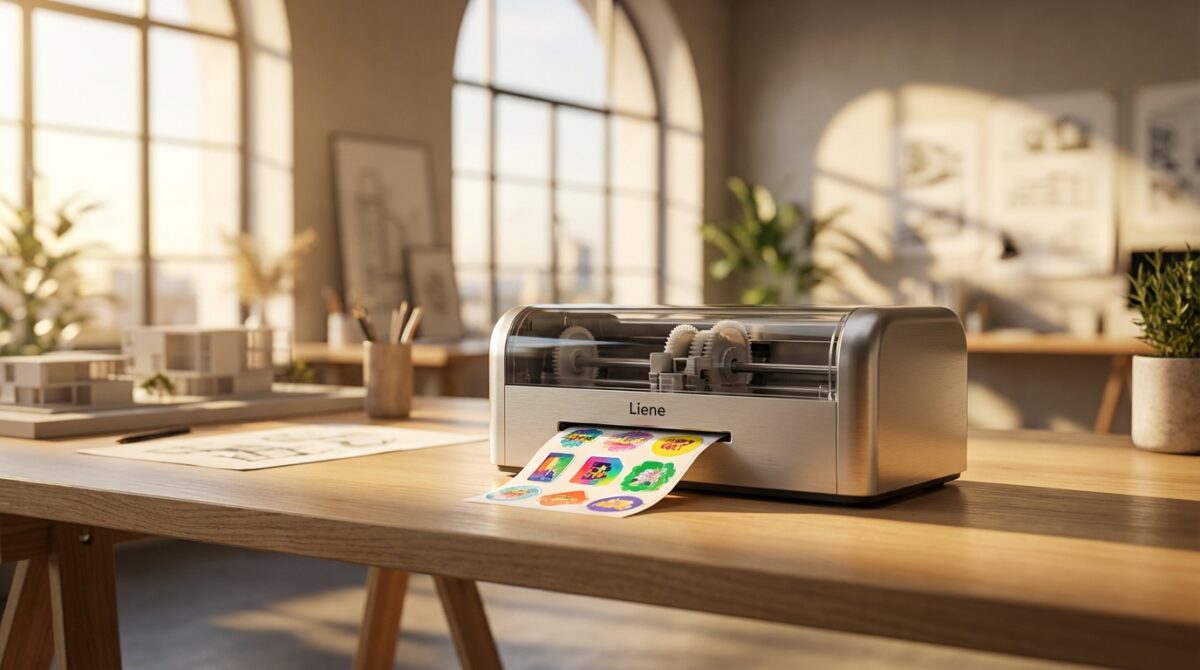
The core differentiator of this sticker printer lies in its integrated cutting mechanism. After the 300 dpi dye-sublimation print is completed, the PixiCut S1 automatically pulls the sticker sheet back inside and the blade traces the contour paths defined in the app. Because the paper never leaves the machine between printing and cutting, alignment errors are minimized and there is no need for registration marks or a separate calibration step. For users accustomed to a Cricut-style workflow, skipping that alignment ritual feels surprisingly liberating.
Cut quality, however, shows a clear trade-off between speed and precision. When you repeat the same design across a full sheet, some stickers come out perfectly framed while others may reveal a thin halo of white on one edge. For personal use, party favors, or journaling, these slight variations rarely matter. Artists selling premium merch might find the inconsistency irritating, especially when producing small runs with highly detailed outlines. That tension between playful immediacy and professional control defines how this machine should be positioned.
Printing technology and real-world sticker durability
Many compact devices look impressive on social media but disappoint when exposed to sunlight, water, or daily handling. The Liene PixiCut S1 relies on a four-pass dye-sublimation process that applies color layer by layer and finishes with a protective overcoat. Each 4×6 sticker sheet emerges as a laminated surface that feels closer to lab-developed mini prints than to home-inkjet labels. For users who stick designs on laptops, water bottles, or phone cases, this high quality print workflow matters more than raw resolution numbers.
Long-term owners report that stickers survive several dishwashing cycles and a full week of outdoor exposure without obvious fading or peeling. That puts the PixiCut S1 ahead of many consumer-grade cutting systems paired with standard inkjet sheets. The trade-off is that the printer uses proprietary paper and cartridges, so cost per sheet is higher than ordering bulk labels from a print shop. When broken down, each 4×6 page hovers around the equivalent of one-off merch pricing rather than mass production economics.
Handling fumes, noise, and day-to-day usability
The thermal sublimation process generates noticeable fumes during a full-page job. In a large living room or studio, this is barely an issue. On a small kitchen table surrounded by impatient children, eyes can briefly feel irritated if someone leans too close during printing. The device remains relatively quiet, with the most audible moment occurring when the internal blade starts tracing the cut paths, producing a soft mechanical scratching sound that users quickly associate with the “magic moment” before peeling.
Maintenance and error handling tell a more mixed story. The app sometimes struggles to provide precise explanations for paper jams or low-ink warnings, leaving beginners guessing which component needs attention. Official documentation, including guides referenced on sites like Make Tech Easier, suggests that firmware updates and clearer in-app messaging are still catching up with how people actually use the machine. For now, patient troubleshooting and a bit of trial and error remain part of the ownership experience.
Software, AI tools, and the creative printing workflow
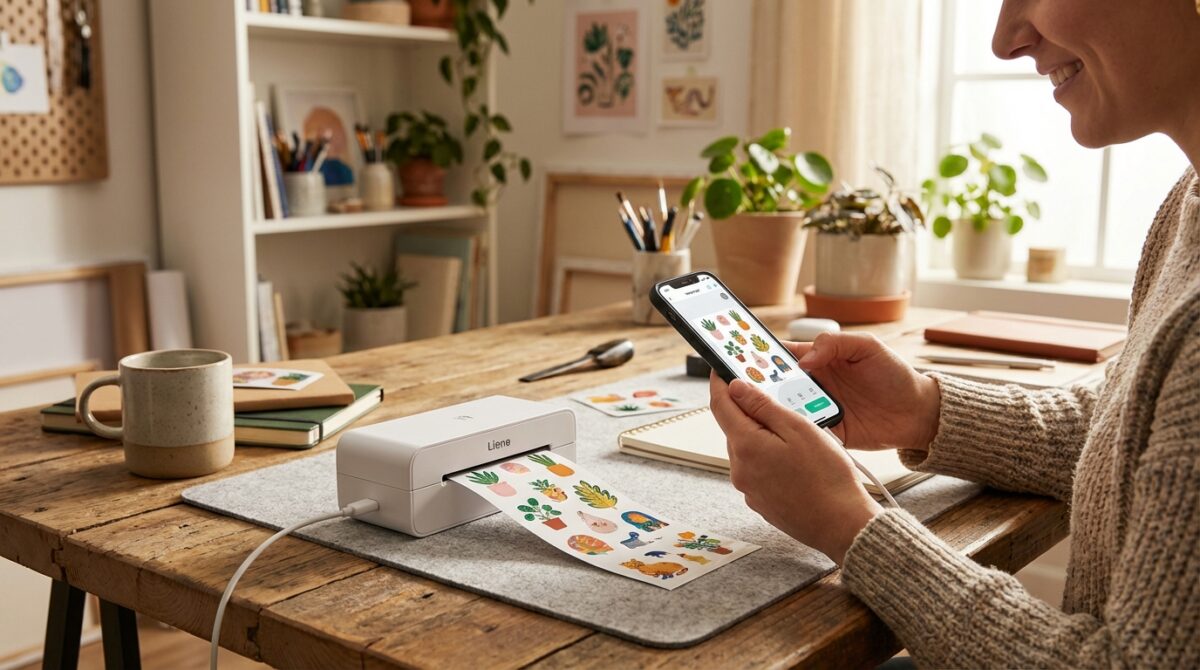
The hardware would not shine without software that feels approachable on a phone screen. The Liene PixiCut S1 app aims to make creative printing as natural as sharing an image on social platforms. After inserting a cartridge and sticker sheet, you handle every decision in the app: layout, border style, cut contour, and basic edits. Users can choose between a tight die-cut outline or a uniform white frame, adjust margins with sliders, and preview how many stickers will fit on each sheet before committing to print.
The AI-assisted design tools target people who love custom stickers yet do not feel confident illustrating from scratch. You can drop in a snapshot, ask the app to remove the background, and let the algorithm generate a clean subject ready for cutting. For quick labels or playful graphics, the pre-built templates and fonts help non-designers achieve attractive results without external software. Power users, on the other hand, often prepare artwork in Procreate, Photoshop, or Affinity Designer, then import PNG files into the PixiCut interface for final placement.
Managing layouts and avoiding waste
Because each sheet carries a non-trivial cost, intelligent layout matters. The app allows you to clone a design, align rows and columns, and fill gaps so that every corner of the 4×6 area contributes value. You can switch from a board filled with many small stickers to a few larger statement pieces depending on your current project. This flexibility makes the device attractive for creators like market vendors who test different sizes and price points on the fly.
Some users, including those documented in independent reviews and on the official product pages such as Liene’s store, suggest building a habit of saving frequently used layouts as templates. That way you can quickly produce “thank you” stickers for packaging, recurring label sets for storage boxes, or consistent branding elements without redesigning every sheet. Thoughtful layout planning turns the higher per-sheet price into deliberate, low-waste output rather than random experimentation.
Portability, compact design, and ideal user profiles
Physically, the Liene PixiCut S1 is closer to a chunky Bluetooth speaker than a traditional printer. At roughly 11 inches in length, it slips into a backpack alongside a laptop and tablet, making it a genuinely portable printer rather than a device that lives permanently on a desk. All it requires is an available power outlet; connectivity and control run through your phone or tablet. For creators who split their time between home, studio, and events, this compact design significantly influences usage frequency.
Consider Leo, who sells handmade keychains at weekend markets. With the PixiCut S1, he can offer visitors a personalized sticker featuring their name typed on the spot, printed and cut while they browse the next table. This type of on-demand personalization often leads to small upsells and supports a more memorable brand experience. Families experience a different advantage: bringing the printer to gatherings turns birthdays or holidays into collaborative sticker sessions where children and adults turn group photos into souvenirs within minutes.
Who gains the most from this innovative sticker printer
Not every user needs this level of interactive, creative printing. Professional illustrators who require perfect color consistency and flawless registration usually prefer working with specialized print partners that deliver hundreds of identical pieces at a lower unit cost. Hobby crafters, on the other hand, may hesitate because the sub-$300 price moves the device beyond casual impulse territory and into planned purchase status, competing with tablets, lenses, or other creative tools.
The people who benefit most are those in between: serious hobbyists, small-batch sellers, educators, workshop facilitators, and parents who like turning daily moments into tangible keepsakes. They value speed, flexibility, and the tactile joy of peeling a sticker they designed themselves more than they care about industrial-grade quality control. For them, a portable sticker printer that invites spontaneous sessions is more important than squeezing every cent out of production costs.
Cost, limitations, and how to decide if it fits your workflow
Any device that feels this fun risks hiding its long-term cost structure. Each 4×6 page from the Liene PixiCut S1 roughly translates to a cost level one might accept for personalized gifts or limited promotional runs, but it becomes expensive if you try to produce large volumes. When compared with ordering from specialized vendors, the break-even point comes quickly if you need hundreds of identical stickers. The financial logic shifts when you factor in the value of instant turnaround, real-time personalization, and the ability to iterate on designs without waiting for shipments.
Several practical limits should be considered. Cut precision, while generally acceptable, can vary across a sheet. The app’s error feedback sometimes feels vague. Fumes suggest that printing sessions should take place in reasonably ventilated spaces. These aspects do not overshadow the core strengths but they help frame the device accurately: a creative tool that shines in flexible, low-volume contexts rather than a production workhorse. For many users, that trade-off is acceptable once they experience how quickly the printer can transform a shared joke or sketch into something everyone can hold.
Simple checklist before buying the Liene PixiCut S1
If you are unsure whether this portable printer belongs on your desk or in your backpack, the following questions can help clarify the decision. They reflect how most owners actually end up using the machine, beyond the initial excitement of unboxing and test prints.
- Do you regularly share photos, doodles, or memes that would be more impactful as physical custom stickers?
- Will you mostly print small batches for events, packaging, gifts, and journaling rather than large production runs?
- Are you comfortable paying a higher per-sheet price in exchange for quick turnaround and a high quality print feel?
- Can you work around occasional minor misalignments in cutting without needing every sticker to be absolutely identical?
- Do you have access to a ventilated space where short bursts of printing will not bother sensitive eyes?
If most answers are positive, the Liene PixiCut S1 will likely integrate smoothly into your creative routine, offering a satisfying balance between innovation, portability, and everyday practicality.
How durable are stickers made with the Liene PixiCut S1?
Stickers produced by the Liene PixiCut S1 use a four-layer dye-sublimation and lamination process. Users report that they resist water, moderate UV exposure, and everyday abrasion better than typical home-printed labels. Many survive several dishwashing cycles and daily handling on laptops or bottles without noticeable fading.
Is the Liene PixiCut S1 suitable for professional merch production?
The PixiCut S1 can support small professional batches and event-specific runs, but it is not optimized for large-scale merch production. Variability in cut alignment and the relatively high cost per sheet mean that online print services or industrial equipment remain more efficient for hundreds of identical stickers.
Can children safely use this sticker printer?
Children can help choose photos, designs, and layouts in the app, while adults handle loading cartridges and managing fumes. The main safety considerations are avoiding direct contact with the internal blade, keeping faces away from the exhaust during printing, and using the device in a reasonably ventilated room.
What devices are compatible with the Liene PixiCut S1 app?
Apple’s Online Store Empowers You to Customize Your New Mac to Perfection
Top home theater projectors to watch for in 2026
The companion app runs on recent Android and iOS smartphones and tablets, enabling wireless control over printing, layout, and cutting options. Some workflows, such as designing complex artwork, still happen on desktop software, but the final import, arrangement, and print steps occur through the mobile app.
How portable is the Liene PixiCut S1 compared with other printers?
The PixiCut S1 is compact enough to fit in a standard backpack and light enough to be carried to events, classes, or cafés. Users only need a power outlet, sticker sheets, and their phone to begin printing. In practice, this makes it significantly more travel-friendly than most traditional photo printers and cutting machines.