
Show summary Hide summary
- How SpaceX wants to turn orbit into an AI power plant
- Why AI data centers are leaving Earth’s power grid
- Managing the risks of a million-satellite constellation
- What this space innovation means for enterprises and developers
- The geopolitical and competitive stakes of space-based AI
- Preparing your organization for orbital infrastructure
- What makes SpaceX’s one million satellite plan different from Starlink?
- How would AI workloads actually run on satellites?
- Are there serious risks to the night sky and orbital safety?
- When could orbital AI data centers become commercially relevant?
- How should enterprises prepare for space-based AI infrastructure?
The idea of surrounding Earth with one million satellites sounds like science fiction, yet SpaceX has already put the first pieces on the table and forced everyone to rethink what AI infrastructure could look like when it escapes the limits of terrestrial power grids.
How SpaceX wants to turn orbit into an AI power plant
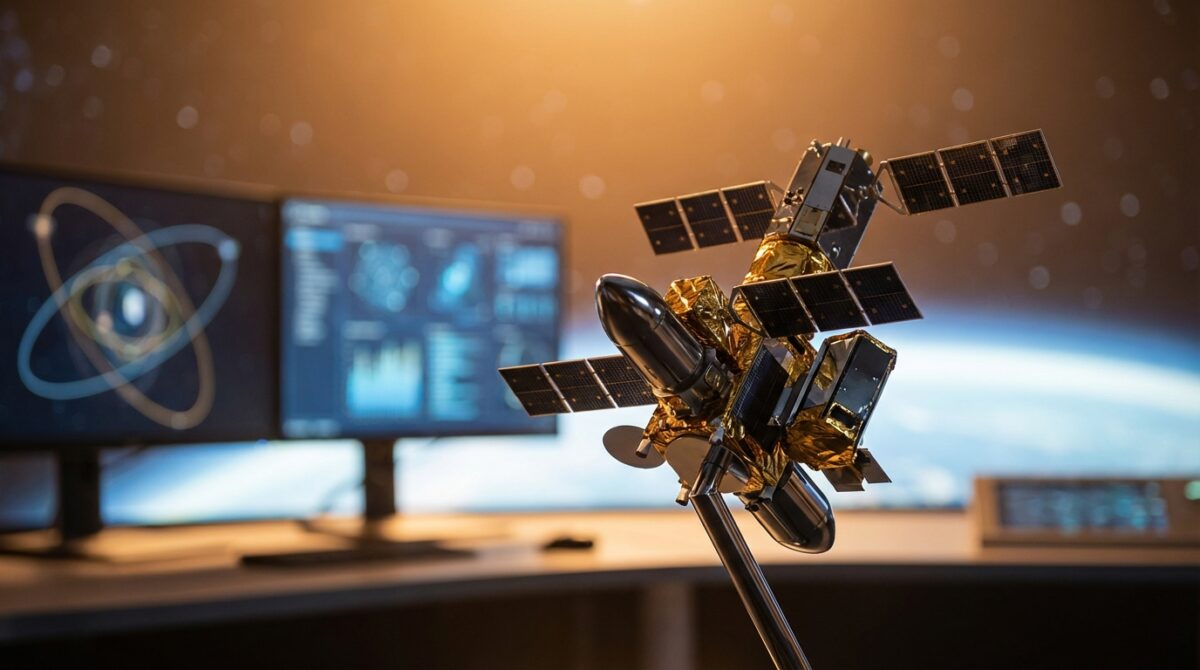
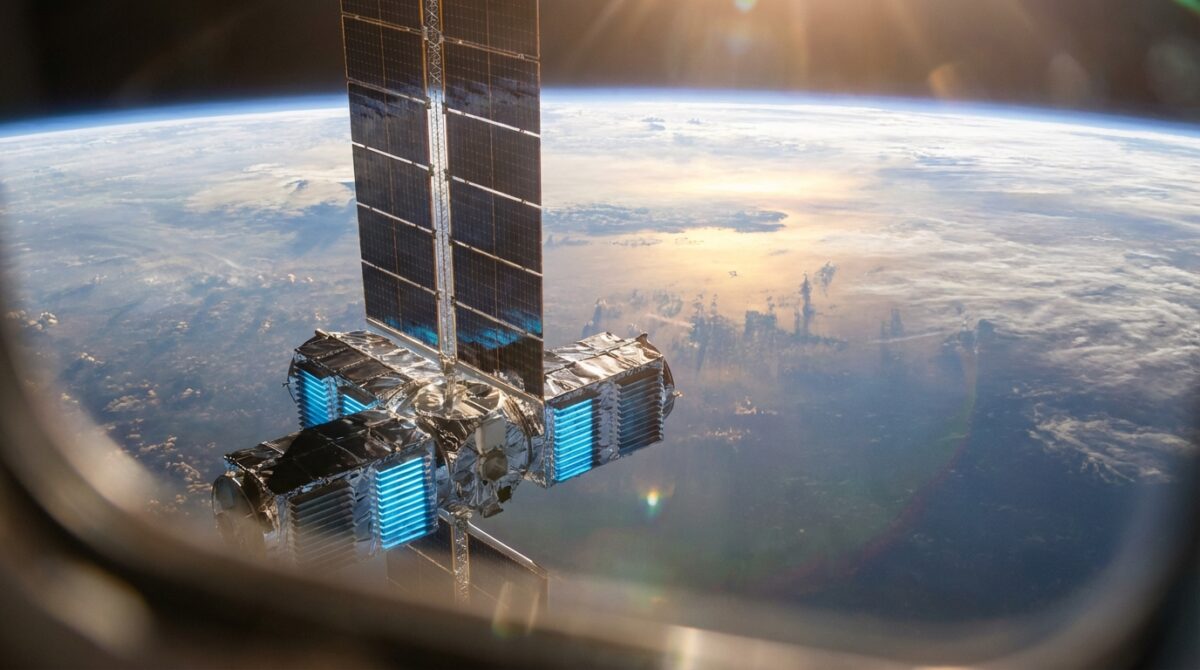
SpaceX is not merely proposing a bigger Starlink. In its recent filings with the U.S. Federal Communications Commission, the company describes a satellite constellation where each spacecraft behaves as a compact data center fed directly by solar radiation. These orbital nodes would not just relay traffic but execute AI workloads in space, then return only the results to the ground. The plan covers orbits between roughly 500 and 2,000 kilometers, organized in narrow shells designed for high-density satellite deployment while keeping latency low enough for interactive applications.
The company links this strategy to a simple observation: AI demand is growing faster than terrestrial electricity infrastructure can follow. Training and running large models already consume gigawatt-scale power, and data centers draw heavily on local grids that also serve homes and industry. By shifting compute to orbit, SpaceX argues that it can tap nearly continuous sunlight, avoid weather disruptions, and reduce the need for complex cooling systems. The concept echoes ideas previously discussed in academic circles about space-based solar power, but here the energy is consumed directly on-board to drive processors rather than beamed back to Earth.
From 9,600 Starlink units to a million AI nodes
Today, there are roughly 15,000 active satellites around Earth, and about 9,600 of them belong to Starlink. SpaceX wants to multiply that population by a factor of around sixty-five, jumping to as many as one million units dedicated to AI and space communication. This scale would dwarf every other satellite constellation ever conceived. Regulators recently granted permission for 7,500 Starlink Gen2 satellites, yet this looks modest compared with the new proposal. For engineers such as Lina, an infrastructure architect at a fictional telecom operator in Europe, this shift means treating orbit not simply as a relay layer but as a massive, distributed cloud region.
The company’s narrative sometimes stretches beyond immediate commercial arguments. Executives refer to these orbital data centers as a first milestone toward a Kardashev Type II civilization, a thought experiment from astrophysics describing societies that harness the full power output of their star. The rhetoric aims to frame the satellite constellation as part of a long-term technology vision that links AI, multi-planetary ambitions, and energy capture at stellar scale. For a professional audience, the interesting part lies less in the philosophical label and more in what such an infrastructure would change for AI-driven services and global connectivity.
Why AI data centers are leaving Earth’s power grid
Every company exploring generative AI faces the same bottleneck: power. Large clusters of GPUs and specialized accelerators demand enormous amounts of electricity, and they generate heat that must be removed by energy-hungry cooling systems. Analysts already estimate that AI-oriented facilities could rival entire mid-sized countries in power consumption within a few years. For data center operators, the key costs combine energy, land, cooling infrastructure, and proximity to fiber links. When Lina evaluates new capacity for her employer, she spends months negotiating with utilities and local authorities before a single server is installed.
SpaceX’s proposal tackles this bottleneck by removing three of those constraints at once. In orbit, the sun provides stable, predictable energy with no clouds and no night for satellites placed in sun-synchronous trajectories. Radiative cooling works directly into space, so thermal management can be simplified compared with dense server halls on Earth. Land cost disappears. The trade-off is launch expense and hardware complexity, which explains why the business case depends heavily on Starship, the heavy-lift rocket Musk promotes as the workhorse for bulk satellite deployment. Without a step change in price per kilogram to orbit, the economics of a million-spacecraft AI cloud would break down quickly.
The logic behind “local compute, minimal downlink”
One recurring idea in SpaceX commentary is that AI bitstreams are increasingly expensive to generate but relatively light to transmit once processed. Training or running a model on huge datasets is computationally intensive, yet the output may be a set of parameters, recommendations, or compressed predictions. The company suggests that satellites with localized AI compute, transmitting only results from low-latency, sunlit orbits, could become the lowest-cost source of AI output within a few years. For someone designing large-scale analytics pipelines, that means reconsidering where raw data lives and where aggregation occurs.
In practice, you could imagine sensitive or bulky training data stored on Earth, with periodic uplinks to orbital nodes for heavy processing. The satellites return distilled insights, model updates, or vector embeddings rather than raw logs. This pattern mirrors edge computing, but the “edge” sits hundreds of kilometers above you. Combined with existing orbital internet capabilities, this approach might suit global services that must serve many regions without duplicating full-scale data centers in every market. It also introduces new design questions about fault tolerance, update cycles, and coordination between ground and orbit.
Managing the risks of a million-satellite constellation
A satellite constellation of this magnitude triggers intense debate among scientists, regulators, and astronomers. Concerns focus on three areas: collision risk, debris creation, and visual impact on the night sky. Between December 2024 and May 2025, Starlink satellites reportedly conducted more than 144,000 collision-avoidance maneuvers, a 200 percent increase in six months. This figure illustrates how crowded low Earth orbit already is. Scaling to a million units would require far more advanced traffic management, reliable propulsion, and automated coordination between fleets owned by different nations and companies.
SpaceX argues that space remains vast compared with the volume occupied by satellites. Musk claims that individual units would be so far apart that they would rarely be visible to each other, let alone collide. Many orbital dynamics experts remain unconvinced, pointing to complex multi-body interactions, uncertainties in tracking small debris, and the risk of cascade events similar to the Kessler syndrome illustrated in popular culture. Ground-based observatories already report interference from satellite trails across long exposures. For astronomy teams studying faint objects or near-Earth asteroids, AI-powered space technology must also respect observational windows and brightness thresholds.
Regulators, negotiation, and probable downscaling
The FCC has seen ambitious numbers from SpaceX before. For Starlink’s first generations, the company requested authorization for tens of thousands of units and ultimately settled on a lower but still aggressive figure. Observers fully expect negotiations to trim the one-million-satellite target. The regulatory process will examine frequency allocation, interference management, deorbiting plans, and coordination with international bodies. Agencies in Europe and Asia will watch the precedent set by any American approval, since orbital paths and radio bands do not respect national borders.
The timeline remains uncertain. Certification for Starship, environmental reviews, spectrum auctions, and consultations with astronomy groups will take years. During that window, competitors are not waiting. Chinese state-backed programs have publicly discussed orbital data centers by 2030, and several European initiatives explore smaller-scale “cloud in space” demonstrators. Reports such as those from technology outlets tracking AI-focused constellations indicate a broader race to control space-based compute. The ultimate risk is a fragmented orbital environment where overlapping networks compete without a shared governance framework.
What this space innovation means for enterprises and developers
For companies building AI services, the prospect of orbital data centers invites a different kind of infrastructure roadmap. Imagine Lina’s team tasked with designing a fraud detection platform for international payments. Traditionally, she would choose regions in major cloud providers, replicate models across continents, and balance latency constraints with local regulations. With a mature orbital internet and a dense satellite constellation of AI-capable nodes, she could target low Earth orbit as a near-global layer, then connect ground points through regional gateways. Latency from user to satellite might rival or beat certain long terrestrial routes.
Developers would need new tools and abstractions. Scheduling jobs to hundreds of thousands of moving nodes demands precise knowledge of orbital positions, visibility windows, and energy budgets on each spacecraft. Some predictive analytics might run only when a satellite passes over regions with specific data sources or regulatory permissions. Platforms that already monitor terrestrial cloud resources could extend dashboards to space technology, exposing metrics such as panel output, thermal headroom, and contact opportunities with ground stations. Articles such as coverage of orbital data center plans hint at future ecosystems where orchestration software spans land and orbit seamlessly.
Practical benefits and trade-offs for AI workloads
From a workload perspective, AI applications can be grouped into several categories that respond differently to this architecture. Training of massive foundation models might benefit from virtually unlimited solar power but would require sustained data feeds and resilient communication links. Inference for latency-sensitive tasks, such as language assistants or industrial monitoring, could use nearby satellites as edge nodes, returning responses in tens of milliseconds. Batch analytics over large sensor graphs could run opportunistically whenever orbital conditions are favorable. Each category implies different cost curves and reliability targets.
There are also non-technical trade-offs. Enterprises must evaluate regulatory expectations around data residency when bits cross into space. Insurance models need to price the risk of satellite failure, launch anomalies, and spectrum disputes. Corporate sustainability teams will scrutinize whether shifting compute to orbit genuinely reduces environmental impact or simply relocates it. Some analyses, including pieces linked by media aggregators such as specialized technology digests, suggest that lifecycle emissions from launches could offset part of the efficiency gains unless reusable rockets reach high flight cadence. For decision-makers, the value lies in understanding when orbital AI infrastructure complements, rather than replaces, ground-based facilities.
The geopolitical and competitive stakes of space-based AI
Any attempt to deploy one million satellites for AI does more than extend a business line; it reshapes strategic power. Control over global space communication and compute layers influences who can train the largest models, who can route traffic during crises, and who sets technical standards. Governments already treat orbital internet services as critical infrastructure. As a result, SpaceX’s plan exists not only as a corporate project but as a piece in a wider contest between the United States, China, Europe, and other actors investing heavily in space innovation.
Chinese announcements regarding orbital data centers by the end of this decade point to a parallel architecture with its own protocols and security assumptions. European agencies discuss open governance frameworks aimed at preventing single-vendor dominance in key orbital shells. Publications such as regional news coverage of the FCC application often highlight both the economic opportunity for launch providers and the regulatory challenge for international coordination. For technology leaders, the message is clear: AI infrastructure choices will increasingly intersect with space policy and export control debates.
Preparing your organization for orbital infrastructure
Forward-looking teams can already take a few concrete steps while regulation and technology mature. First, they can track developments through reliable sources, including detailed analyses from outlets like industry-focused reporting on satellite data centers. Second, they can experiment with architectures that treat connectivity as dynamic, using software-defined networking and multi-cloud deployments, so that integrating orbital links later will not require full redesigns. Third, they can map which AI workloads would benefit most from abundant solar power and global reach versus those that must remain tightly coupled to local physical infrastructure.
To make this reflection concrete, Lina’s team maintains an internal list of candidate projects for future space-enabled enhancements. They include global logistics optimization, climate monitoring using satellite imagery fused with orbital AI inference, and disaster response systems that rely on resilient off-planet compute. This kind of portfolio thinking helps organizations avoid being surprised when space-based services reach commercial scale. The satellites may still be on paper, yet the strategic groundwork for using them can start long before the first AI-focused spacecraft leaves the pad.
- Map AI workloads by latency sensitivity and data residency constraints.
- Adopt networking practices that handle intermittent, variable-quality links.
- Track regulatory guidance on space-based processing of personal data.
- Explore partnerships with space technology providers early.
- Design observability tools that can extend to orbital resources.
What makes SpaceX’s one million satellite plan different from Starlink?
Starlink focuses mainly on providing orbital internet connectivity, acting as a communications layer for users on the ground. The new proposal describes satellites that also function as AI data centers, running compute workloads directly in orbit and sending back processed results rather than only forwarding traffic. This turns the constellation into a distributed cloud platform powered by solar energy, not just a broadband network.
How would AI workloads actually run on satellites?
Each satellite would host specialized processors, likely accelerators optimized for machine learning inference and possibly training on selected tasks. Data would be uploaded from ground stations, processed on-board using locally generated solar power, and then reduced outputs or model updates would be transmitted back to Earth. Scheduling software on the ground would decide which jobs run on which spacecraft based on orbital position, available energy, and communication windows.
Are there serious risks to the night sky and orbital safety?
Astronomers and orbital dynamics experts express strong concerns. A million satellites far exceed the current population in low Earth orbit, increasing the probability of collisions and debris creation. Observatories already struggle with streaks from existing constellations. Any large-scale deployment would require rigorous collision avoidance systems, coordinated deorbiting plans, and measures to limit brightness so that scientific observations and long exposures remain feasible.
When could orbital AI data centers become commercially relevant?
Regulatory approvals, Starship launch cadence, and hardware readiness will determine the timeline. Most analyses suggest that full-scale deployment will take many years to materialize. However, smaller experimental clusters or pilot services could appear earlier, giving early adopters a chance to test AI workloads in orbit before the constellation reaches the scale described in regulatory filings.
How should enterprises prepare for space-based AI infrastructure?
Organizations can start by identifying which of their AI use cases benefit from global reach and abundant solar power. They should modernize networking and observability stacks to support highly distributed environments, follow reliable coverage of space technology initiatives, and engage with regulators about data protection requirements in orbit. Early architectural flexibility will make it easier to integrate orbital services once they become commercially accessible.