

Show summary Hide summary
- How Suno turned prompts into 2 million paying subscribers
- Inside the leap to $300 million in annual recurring revenue
- The copyright battle reshaping AI music business models
- How AI music platforms transform everyday creative work
- What Suno’s rise signals for the future of digital music
- Preparing for an AI‑first music landscape
- How does Suno’s AI music generator actually work for users?
- Why is Suno’s $300 million annual recurring revenue significant?
- What are the main copyright concerns around AI music platforms?
- Can AI music tools replace human musicians completely?
- How should independent creators approach platforms like Suno?
The most striking music success story this year does not start in a studio, but in a browser: an AI Music Platform turning plain text into tracks has just crossed 2 million paying subscribers and $300 million in Annual Recurring Revenue. For anyone working in music, tech, or digital media, this shift is impossible to ignore.
Those numbers belong to Suno, a generative AI music startup that now sits at the center of a heated debate about creativity, copyright, and who will own the next decade of Digital Music. Since late last year, the company has moved from fast-growing curiosity to a platform with real scale, serious revenue, and industry‑level consequences.
How Suno turned prompts into 2 million paying subscribers
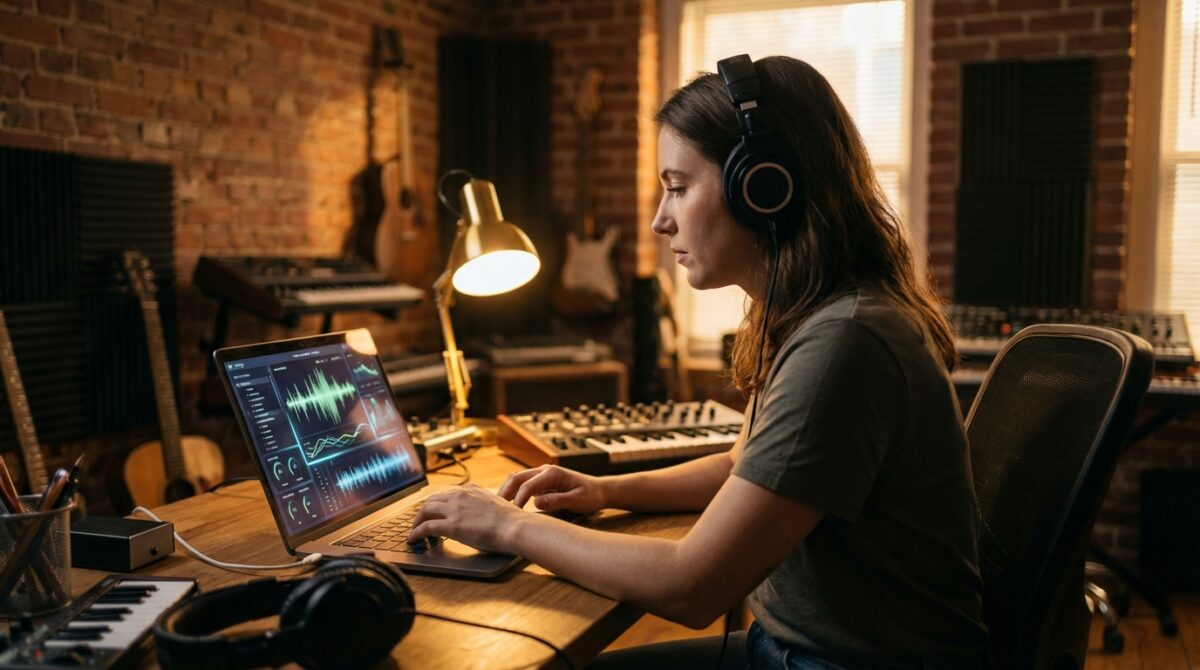
Suno’s story starts with a simple promise: type a natural language prompt, receive a finished song in minutes. The platform removes technical barriers that traditionally kept most people away from Music Technology. Users do not need to play an instrument, understand harmony, or own any recording gear. A laptop and a short text description are enough.
Perplexity’s New Computer: Betting on the Power of Multiple AI Models for Users
Samsung Integrates Perplexity AI to Empower Galaxy Devices with Advanced Intelligence
That frictionless experience explains much of the platform’s Subscription Growth. According to CEO and co‑founder Mikey Shulman, shared in a LinkedIn update, Suno reached 2 million paying subscribers and around $300 million in recurring revenue only two years after launch. Just three months earlier, the company reported roughly $200 million in annualized revenue when it closed a $250 million funding round at a $2.45 billion valuation, as covered by outlets such as TechCrunch’s analysis of the funding surge. That pace would be impressive for a mature SaaS product; for a young AI music tool, it signals unusual momentum.
From casual experiments to serious usage
At first, many users came to Suno out of curiosity, treating the AI Music Platform as a playful experiment. Early social media clips showed people generating parody tracks, imaginary soundtracks, or birthday songs. Over time, usage deepened. Shulman has indicated that more than 100 million people have tried the service, far beyond the pool of paying subscribers. This wide funnel allowed Suno to identify niches where AI‑generated audio delivers ongoing value.
One clear pattern emerges among small creators. Independent game developers, solo podcasters, and YouTube channel owners often lack the budget for custom scores. Royalty‑free libraries do not always match their aesthetic needs. For them, Suno’s subscription fee feels modest compared with licensing uncertainty. That dynamic helps explain why the platform’s Paying Subscribers convert out of a broad user base rather than relying solely on hobbyists.
Inside the leap to $300 million in annual recurring revenue
The move from $200 million to $300 million in Annual Recurring Revenue within roughly one quarter deserves closer examination. Revenue of this scale suggests that Suno is no longer a niche Music Technology experiment. It behaves more like a mid‑sized software company with meaningful cash flow and predictable subscriptions. Investors pay attention when a consumer service combines rapid user growth with strong retention.
Several factors appear to support this trajectory. First, the funding round of $250 million provided capital for product development and infrastructure, reducing technical bottlenecks. Second, publicity around both the lawsuits and the creative success stories expanded awareness. Third, improvements in audio quality and style diversity made the output more usable in professional and semi‑professional contexts. Many creators upgrade from free tiers once they see that AI tracks can compete with stock music in online video, advertising, and social campaigns.
Why subscribers keep paying for AI music
Recurring revenue depends less on flashy marketing and more on repeat value. Users return to the platform because AI‑assisted composition solves practical problems. A marketer can generate multiple variations of a jingle in a single afternoon. A filmmaker can test several emotional tones for a scene without scheduling a composer. For working professionals, time saved often translates directly into money earned or deadlines met.
There is also a psychological component. When users invest effort in refining prompts and learning how the system behaves, they develop a sense of workflow ownership. That familiarity encourages continued spending. Reports from industry coverage such as Byteiota’s breakdown of Suno’s ARR milestone highlight that retention metrics remain strong even amid controversy. In other words, the people who pay for the service largely feel they receive dependable value, regardless of ongoing legal battles.
The copyright battle reshaping AI music business models
Behind the impressive Million Dollars of revenue lies a tension that touches every corner of the Music Industry. Generative models require enormous training datasets. For Suno, that likely included recordings owned by major labels. Several rightsholders filed lawsuits, accusing the company of infringing copyrights by using protected works without authorization to train its AI. These disputes echo similar battles around image and text generation, but music carries its own legal and cultural weight.
A turning point arrived when Warner Music Group chose negotiation over prolonged litigation. Instead of pushing its claim indefinitely, Warner reached an agreement allowing Suno to develop models that use licensed parts of its catalog. That deal signals a possible template for future arrangements. Rather than trying to prevent generative tools outright, labels may seek revenue participation and control over how their assets inform AI systems. For subscription platforms, such agreements could become a line item similar to traditional licensing costs.
Artists, backlash, and new forms of collaboration
Not all musicians welcome this future. Prominent artists such as Billie Eilish, Chappell Roan, and Katy Perry have expressed strong reservations about AI‑generated tracks that imitate human performers too closely. Their concerns range from economic displacement to the erosion of artistic identity. When synthetic songs climb streaming charts or appear on playlists, human creators fear a shrinking share of audience attention and royalty income.
Yet the story is not purely adversarial. Individual cases illustrate how AI tools and human talent can intersect. One widely reported example involves Telisha Jones, a 31‑year‑old from Mississippi who had written poetry for years but lacked recording resources. Using Suno, she transformed one of her texts into an R&B track titled “How Was I Supposed to Know.” The song went viral on platforms like Spotify and even touched Billboard charts. She later signed a reported $3 million deal with Hallwood Media. For creatives outside traditional networks, such outcomes show why some are willing to experiment despite controversy.
How AI music platforms transform everyday creative work
Beyond headline numbers and lawsuits, Suno’s growth reveals how AI Music Platform tools seep into daily workflows. Consider Lena, a fictional but typical freelance creator who produces short documentaries for social channels. Before generative audio, she juggled licensing sites, clumsy search interfaces, and unclear usage terms. Now she keeps a Suno subscription and generates custom background tracks tailored to each client’s brand language, mood, and pacing.
Her experience mirrors a broader trend across Digital Music production. Tools like Suno sit alongside more traditional software in a growing ecosystem that also includes AI note‑taking gadgets, smart listening devices, and new recommendation engines. Coverage on sites such as reports about Gemini’s realistic music samples shows how quickly competing technologies move. For working professionals, the skill now lies less in playing every instrument and more in orchestrating a set of digital tools to deliver results efficiently.
Practical ways professionals already use Suno
Several usage patterns now appear repeatedly among Paying Subscribers. These patterns demonstrate how AI moves from novelty to routine practice. They also highlight where human judgment remains central, even when composition is automated.
- Video creators generate theme music and bumper stings aligned with visual identity for YouTube, TikTok, and brand channels.
- Indie game studios prototype adaptive soundtracks quickly, then refine or replace them with human‑composed versions as budgets allow.
- Marketing teams build multiple campaign tracks for A/B testing, choosing the options that drive higher engagement metrics.
- Songwriters explore alternate arrangements or genres for their lyrics, using AI drafts as starting points rather than final masters.
- Educators and students create simple pieces for classroom projects, focusing lessons on storytelling and structure rather than technical production.
Each case shows that Music Technology does not erase creative choice. Instead, it compresses production time, making it cheaper and faster to explore options. The professionals who benefit most treat Suno as a collaborator that offers first drafts at scale, then apply their own taste and context awareness.
What Suno’s rise signals for the future of digital music
Suno’s rapid climb to millions of subscribers and hundreds of millions in Annual Recurring Revenue highlights a deeper shift: music is increasingly treated as a flexible, generative layer for digital experiences rather than a static product. When AI tools integrate with video editors, social apps, and even hardware like wireless earbuds, sound becomes more responsive to context. That evolution aligns with broader innovation in consumer tech and media services.
Industry observers already compare AI music adoption to earlier moves such as streaming’s impact on album sales or ringtone markets in the 2000s. The difference now lies in authorship. As news outlets from Music Business Worldwide’s coverage of Suno’s revenue to mainstream business publications underline, the key question is who controls and monetizes output when machines and people co‑create. Decisions made in the next few years about licensing frameworks, ethical guidelines, and artist partnerships will shape how future listeners perceive authenticity.
Preparing for an AI‑first music landscape
For labels, publishers, and individual artists, ignoring this transformation carries real risk. The audience already hears AI‑generated songs in ads, social clips, and background playlists, often without realizing it. Professionals who understand how platforms like Suno operate can better negotiate contracts, protect their catalogs, or design new revenue streams. Some may build branded models that reflect specific styles under license, while others may focus on live performance and fan relationships that AI cannot replicate.
The Suno milestone does not settle the debate over AI and creativity, but it clarifies the scale of the shift. When an AI Music Platform can reach 2 million subscribers and hundreds of millions of dollars in recurring revenue so quickly, the line between software and culture blurs. Anyone involved in Digital Music now faces a strategic choice: treat generative audio as a threat to resist or as a new medium to master.
How does Suno’s AI music generator actually work for users?
Users describe the music they want in plain language, specifying elements such as genre, mood, tempo, or instruments. The platform’s generative model then creates a complete track that matches the prompt. Listeners can iterate by adjusting the text description until the result fits their project. No traditional recording equipment or music theory knowledge is required to begin producing tracks.
Why is Suno’s $300 million annual recurring revenue significant?
Reaching $300 million in annual recurring revenue only a few years after launch places Suno in the same revenue range as established software companies rather than early‑stage startups. The figure indicates that millions of people are willing to pay subscriptions for AI‑generated music, signaling a structural change in how audio is produced, licensed, and valued across media industries.
What are the main copyright concerns around AI music platforms?
Rights holders worry that AI models are trained on recordings and compositions protected by copyright without proper authorization or compensation. They argue that such use can undermine the market for human‑made works. Platforms counter that training constitutes a different type of use. Recent deals, such as licensing agreements with major labels, suggest that negotiated access to catalogs may become a standard requirement.
Can AI music tools replace human musicians completely?
YouTube Introduces Gemini-Powered ‘Ask’ Button for TV Users
Meta’s Metaverse Vision Shifts Away from Virtual Reality
AI systems can generate convincing tracks in many styles, especially for background or functional uses. However, they do not replicate lived experience, stage presence, or the social connection that fans build with identifiable artists. Many professionals see AI as a way to accelerate drafting, prototyping, or low‑stakes content while reserving human creativity for signature projects, performance, and long‑term artistic vision.
How should independent creators approach platforms like Suno?
Independent creators can treat AI music services as part of a broader toolkit. Before relying on them, they should read licensing terms carefully, understand how generated tracks can be used commercially, and keep copies of prompts and outputs for documentation. Experimenting with AI can open new opportunities, but mixing AI‑generated elements with original work and clear branding helps maintain a distinct artistic identity.